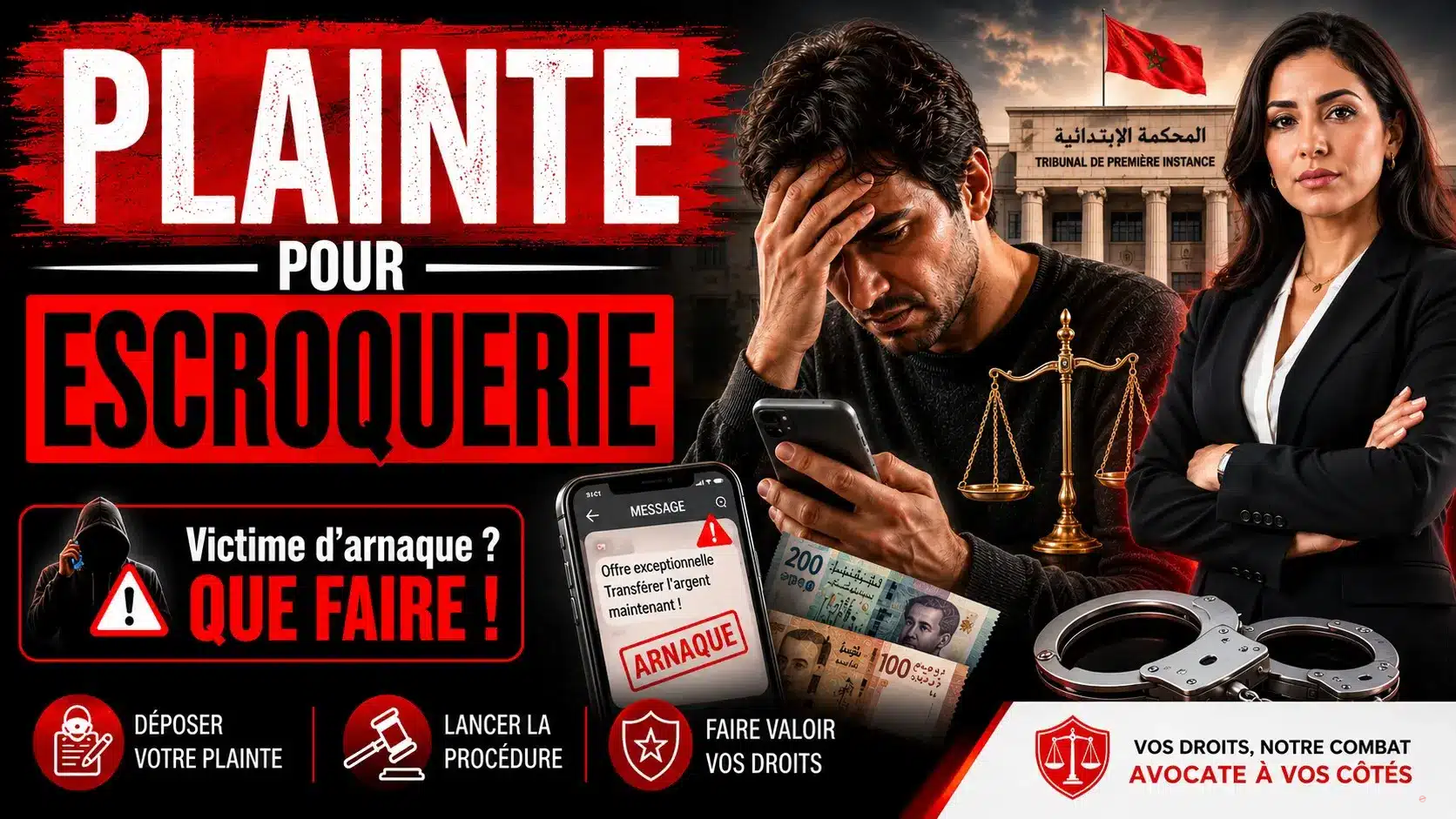
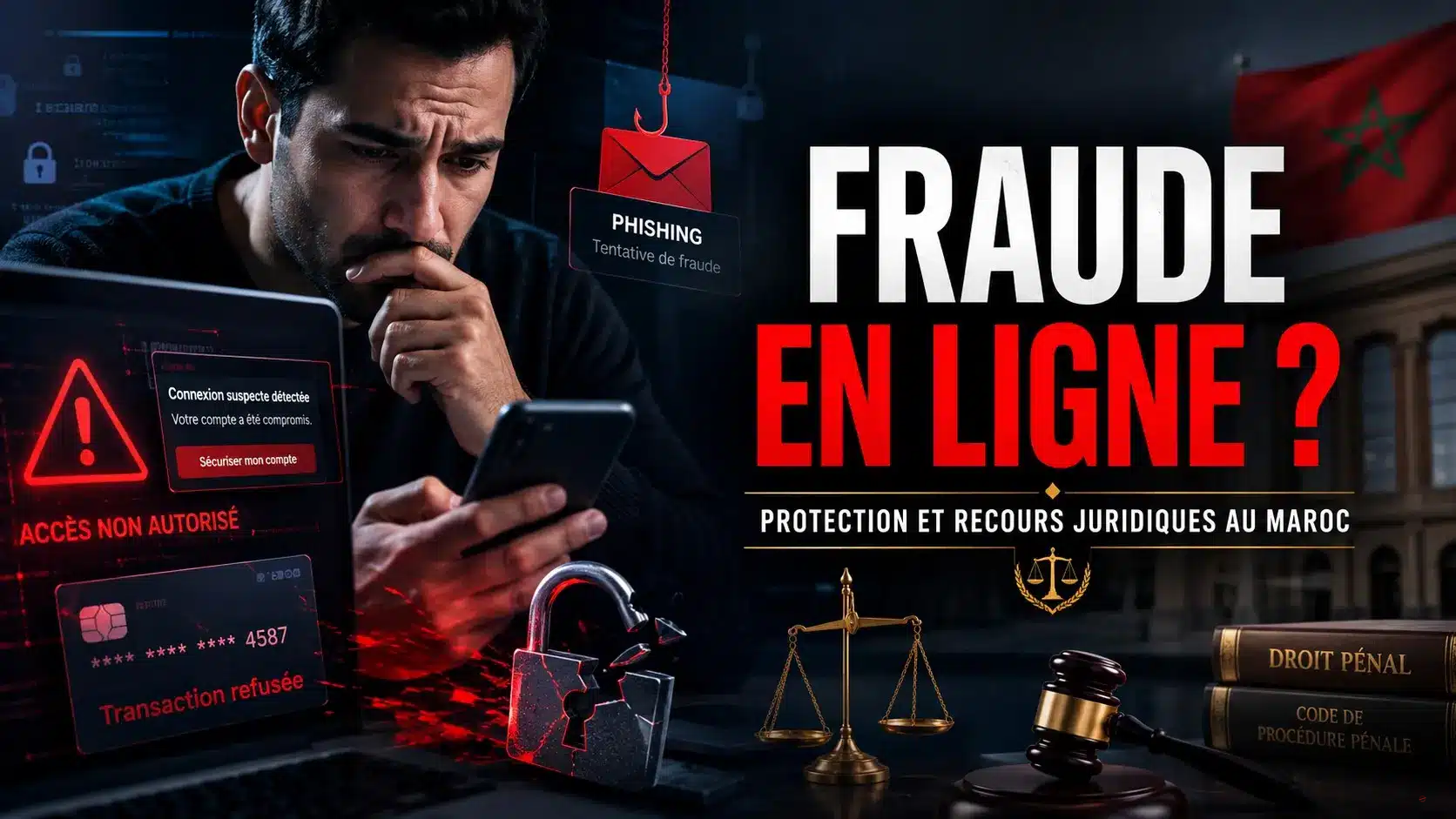
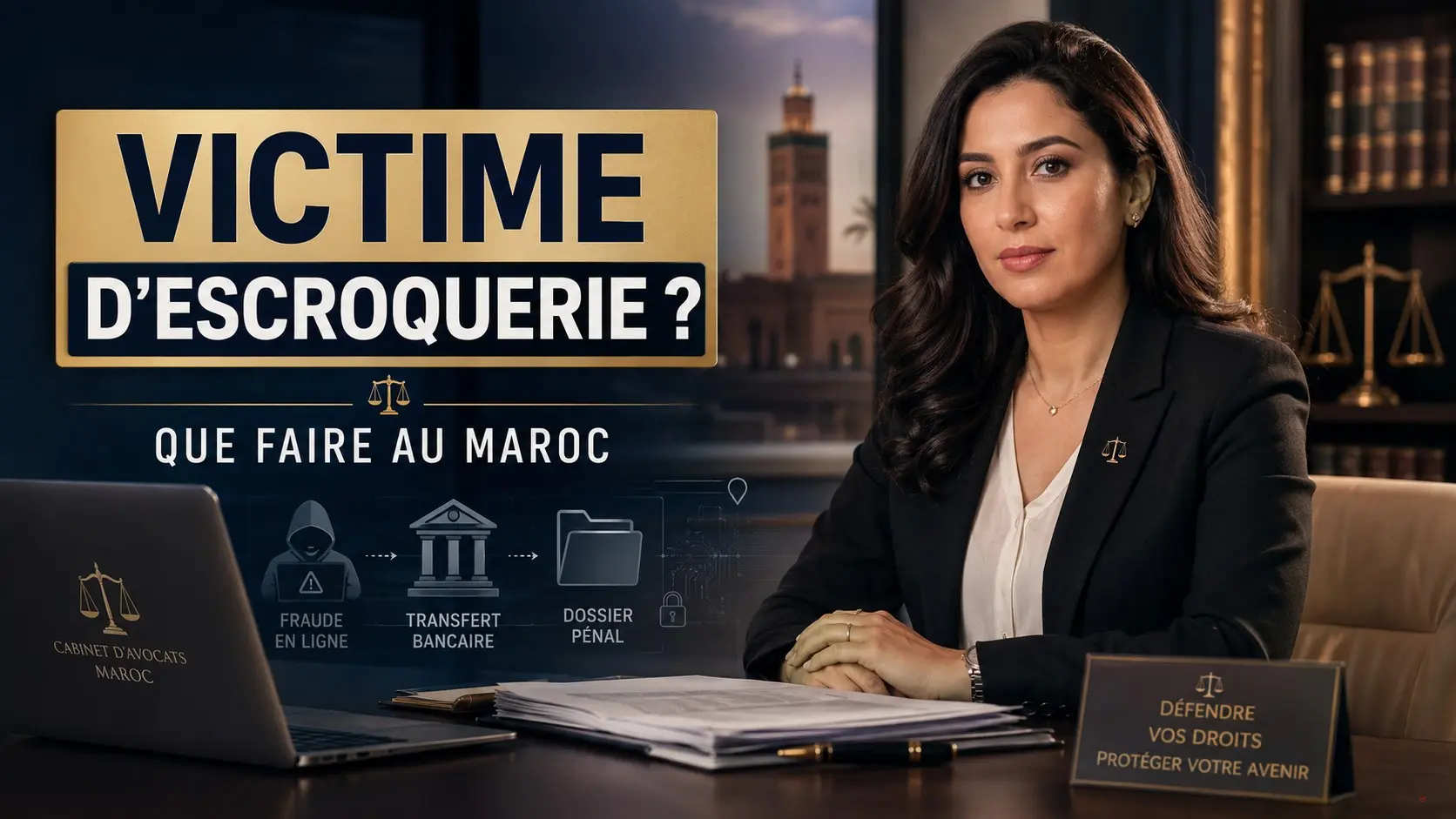
Si vous lisez cette page, il est probable que vous-même ou l’un de vos proches ayez été victime d’une opération d’escroquerie ou de fraude sur Internet, que ce soit par un faux message, un virement suspect, un compte usurpé ou un achat en ligne non conforme à ce qui avait été promis. Dans un tel moment, il est naturel de ressentir de l’inquiétude, de la colère et de la confusion. Cependant, l’essentiel est de savoir que le Moroccan law prévoit des voies de signalement et de poursuite strictes, et qu’une réaction rapide peut contribuer à protéger vos droits et votre patrimoine.
Cette page a été conçue comme un guide pratique pour vous aider à comprendre la fraude électronique In Morocco, à identifier les autorités compétentes, à savoir quelles preuves conserver, et à mieux comprendre le rôle décisif qu’un avocat expérimenté peut jouer pour vous accompagner juridiquement dès la première étape.
What is electronic fraud?
Electronic fraud involves using digital means or the internet to deceive a victim into handing over money, disclosing personal or banking information, or performing an act that harms their financial or moral interests. When the elements of deception and the pursuit of financial gain are present, many actions can be legally classified as fraud.
Phishing and bank data theft
This type of fraud often takes the form of fake messages, links, or web pages that appear to come from a bank, postal service, or well-known company. The goal is to obtain passwords, bank card numbers, or verification codes in order to exploit this information.
Digital blackmail and threats to release private content
This modus operandi involves threatening the victim with the publication of photos, videos, or private conversations in exchange for money or other demands. In these types of cases, the criminal offense is twofold. It is essential to act quickly, not to give in to blackmail, to preserve all evidence, and to contact the appropriate authorities.
E-commerce and social media scams
This includes fictitious offers, fake sellers on Instagram or Facebook, products that are never delivered or do not match the description, and requests for advance payment without actual delivery. In these situations, exchanged messages, proof of payment, phone numbers used, and screenshots play a crucial role in the investigation.
Digital identity theft
This occurs when someone hacks an account (WhatsApp, Facebook) or creates a fake profile in the name of a relative, friend, or institution, and then asks contacts for money or information. The sooner it is reported, the better the consequences can be limited and useful digital traces preserved.
The legal framework in Morocco: Your legal safeguards
Moroccan law does not leave cyberspace unregulated. It firmly represses acts of cybercrime through a precise legal framework, which allows for the building of solid criminal cases.
- Law 07-03 relating to offenses against automated data processing systems: Integrated into the Penal Code (articles 607-3 et seq.), this law severely punishes fraudulent access to a computer system, hacking, modification or deletion of data (such as hacking an account or a database).
- Article 540 of the Penal Code (Fraud): This fundamental text applies perfectly to the digital environment. It punishes anyone using fraudulent maneuvers, false credentials, or tricks to mislead the victim and induce them to hand over funds.
- Law 09-08 relating to the protection of natural persons with regard to the processing of personal data: It protects against the misuse and illegal dissemination of your personal and banking data.
From a procedural standpoint, the victim can file a complaint with the judicial police (particularly the cybercrime unit) or directly with the Public Prosecutor. In digital cases, the speed with which the complaint is filed and the thoroughness of the supporting documentation are often crucial.
The crucial importance of digital evidence
In cases of electronic fraud, the strength of the case often depends on the quality of the evidence preserved from the very beginning. It is imperative to gather and retain:
- The screenshots (clearly showing the time and date).
- Conversations and messages (WhatsApp, Messenger, SMS).
- Emails with their headers.
- The phone numbers and IP addresses used by the scammer.
- Internet links (URLs) to fake sites or profiles.
- Receipts, bank statements or proof of transfer (Wafacash, Western Union, bank transfers).
- The usernames or aliases of the accounts used by the fraudsters.
Golden rule: Don't delete anything, even if some details seem minor at first or if you feel ashamed. A seemingly insignificant detail (like a transfer number) can become the key piece of evidence that allows the police to identify the perpetrator.
Actions to take immediately after fraud
If you have just realized you've been scammed, take these emergency steps:
- Freeze your finances: Contact your bank immediately to dispute the transaction if the matter involves a bank card, or to try to block a recent transfer.
- Secure your access: Change your passwords immediately and enable two-factor authentication (2FA) on your email and social media accounts.
- Archive the evidence: Take screenshots of everything before the fraudster deletes their accounts or messages.
- Consult a professional: Before going to the police station with an incomplete file, consult a criminal lawyer to classify the facts and write an impeccable complaint.
The role of Maître Amal Anouide: Legal expertise at your service
Electronic fraud is not always straightforward from a legal standpoint. The methods used are constantly evolving, and the acts can fall under the categories of fraud, identity theft, or data breach.
Master Amal Anouide, avocate expérimentée et fondatrice de son propre cabinet à Safi, met à profit son expertise pratique pour accompagner les victimes de cybercriminalité. Que vous soyez in Safi, dans une autre ville du Maroc, ou même un MRE cherchant une assistance à distance, son approche permet de transformer une situation confuse en un dossier juridique clair et structuré.
The exclusive support provided by Maître Anouide's firm includes:
- A precise assessment of the facts in light of the Penal Code and Law 07-03.
- Drafting a professional complaint, devoid of emotion and focused on legal qualifications.
- Assistance in the legal formatting of digital evidence.
- Referral to the competent authority and rigorous monitoring of the case before the courts.
Frequently Asked Questions (FAQ)
Can I get back the money that was stolen from me?
Recovering the lost funds is possible if the perpetrator (or the account holder) is identified and apprehended. You can then file a civil suit to demand reimbursement and damages. Everything depends on how quickly the incident is reported and the evidence left behind.
How to report electronic fraud in Morocco?
The report is made by filing a reasoned complaint with the Public Prosecutor or the judicial police services specializing in cybercrime, attaching all technical and financial evidence.
Does Moroccan law actually protect me if the scam is on the Internet?
Yes. The Penal Code applies perfectly to the digital environment. A scam is still a scam, whether it takes place on the street or on a social network. The effectiveness of the case depends on the quality of the evidence presented.
What should you do if the scammer claims to be abroad?
Scammers often lie about their real location. Even if the perpetrator is actually abroad, this should not prevent you from reporting the crime. Morocco cooperates with many countries (Interpol, bilateral agreements). The first step is to document the case with your lawyer.
Will my identity remain confidential when I report it?
Yes, the judicial authorities and your lawyer are bound by professional secrecy. For example, in the case of a blackmail complaint, the matter is handled with great discretion to protect the victim's reputation.
Don't let cybercriminals go unpunished
Être victime d’une fraude électronique est une épreuve difficile, mais vous n’êtes pas obligé de l’affronter seul ni de subir en silence. En agissant vite, en conservant vos preuves et en sollicitant une legal assistance pointue, vous reprenez le contrôle de la situation.
Contact the office of Lawyer Amal Anouide Contact us today to obtain confidential legal guidance, assess your case and initiate the most appropriate course of action to defend your interests.
Avertissement : Les informations figurant sur cette page sont fournies à titre purement informatif et de vulgarisation juridique. Elles ne sauraient remplacer une Legal consultation formelle. Chaque affaire est unique et nécessite l’examen des pièces par un avocat