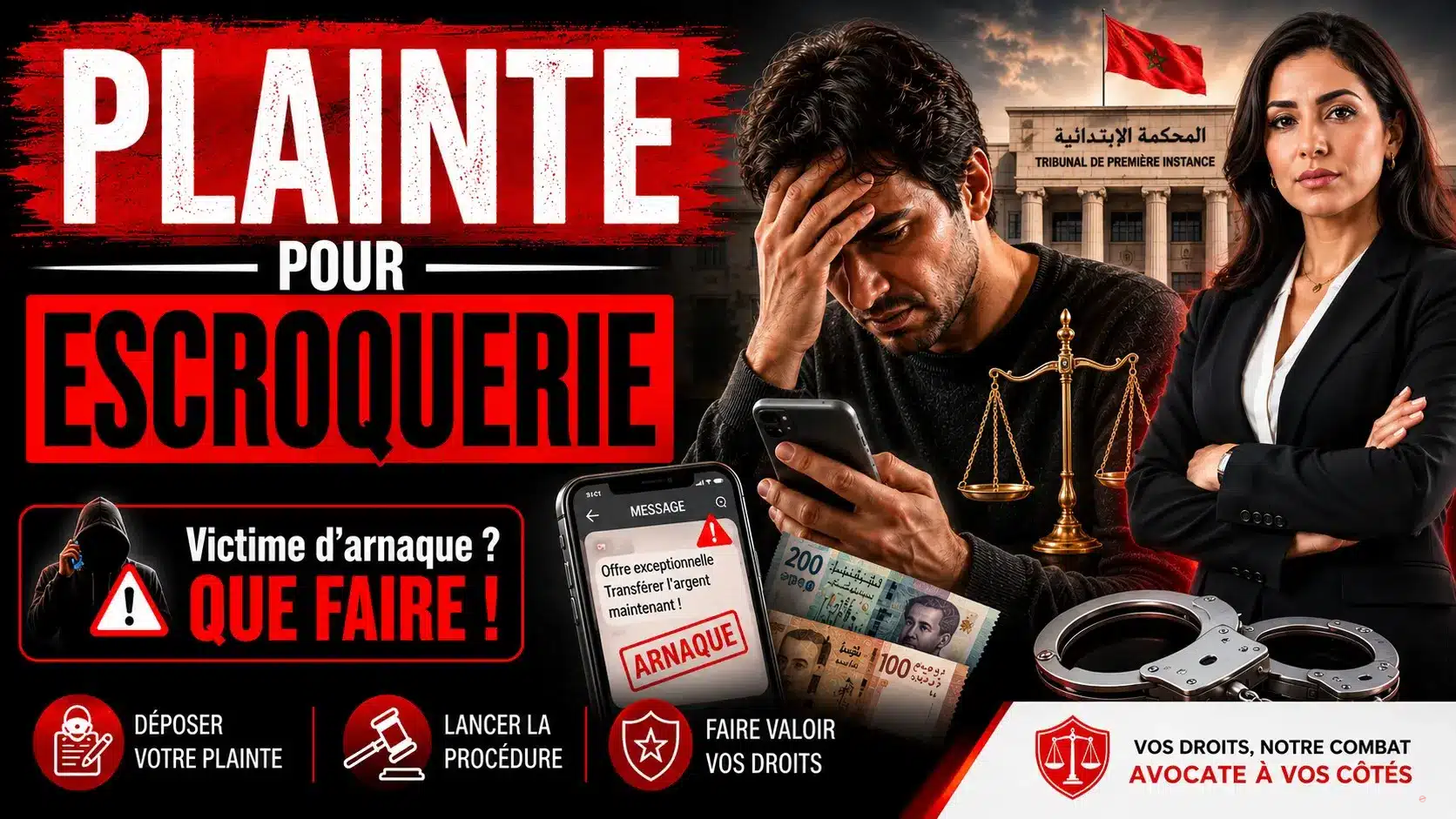
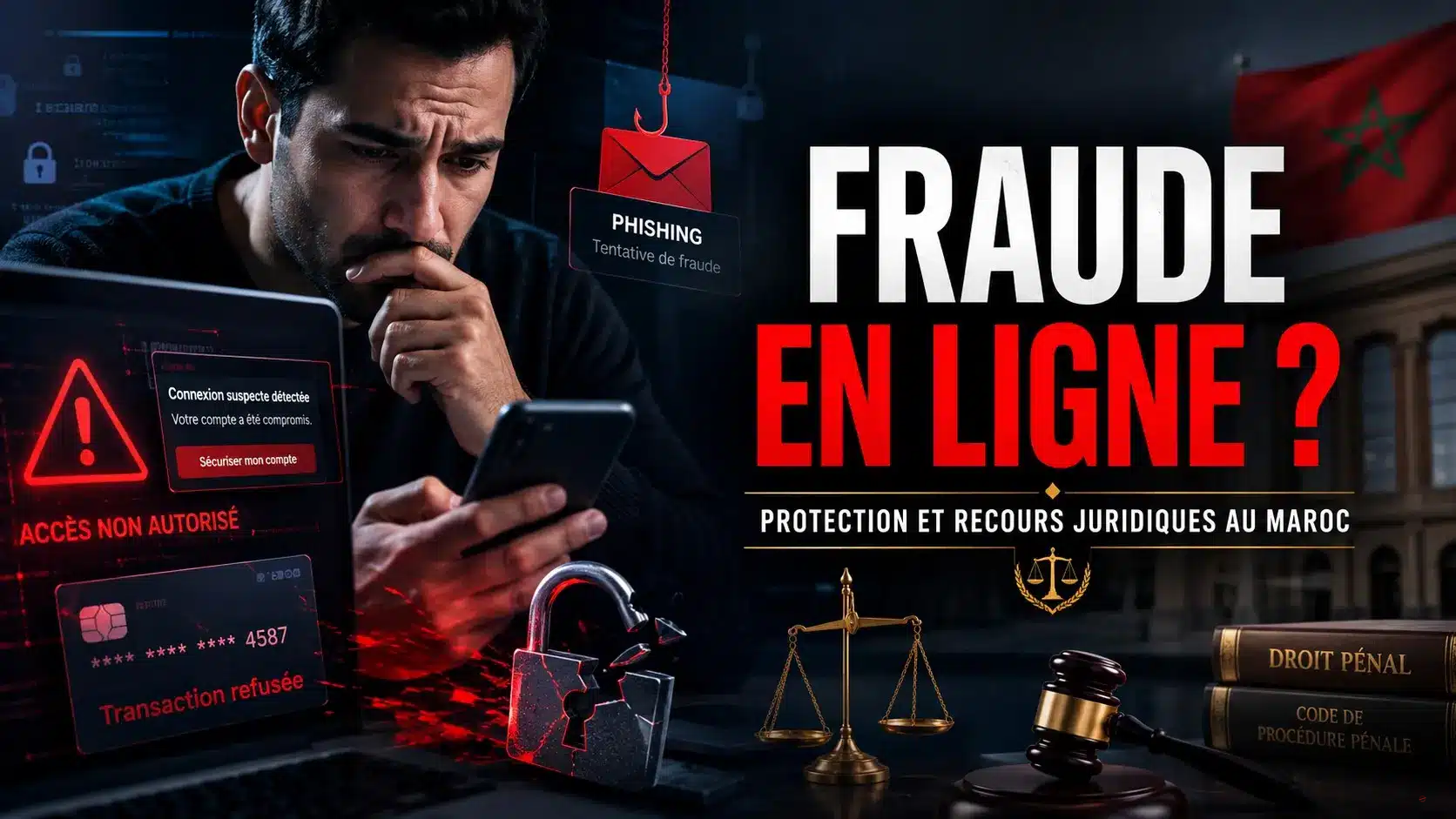
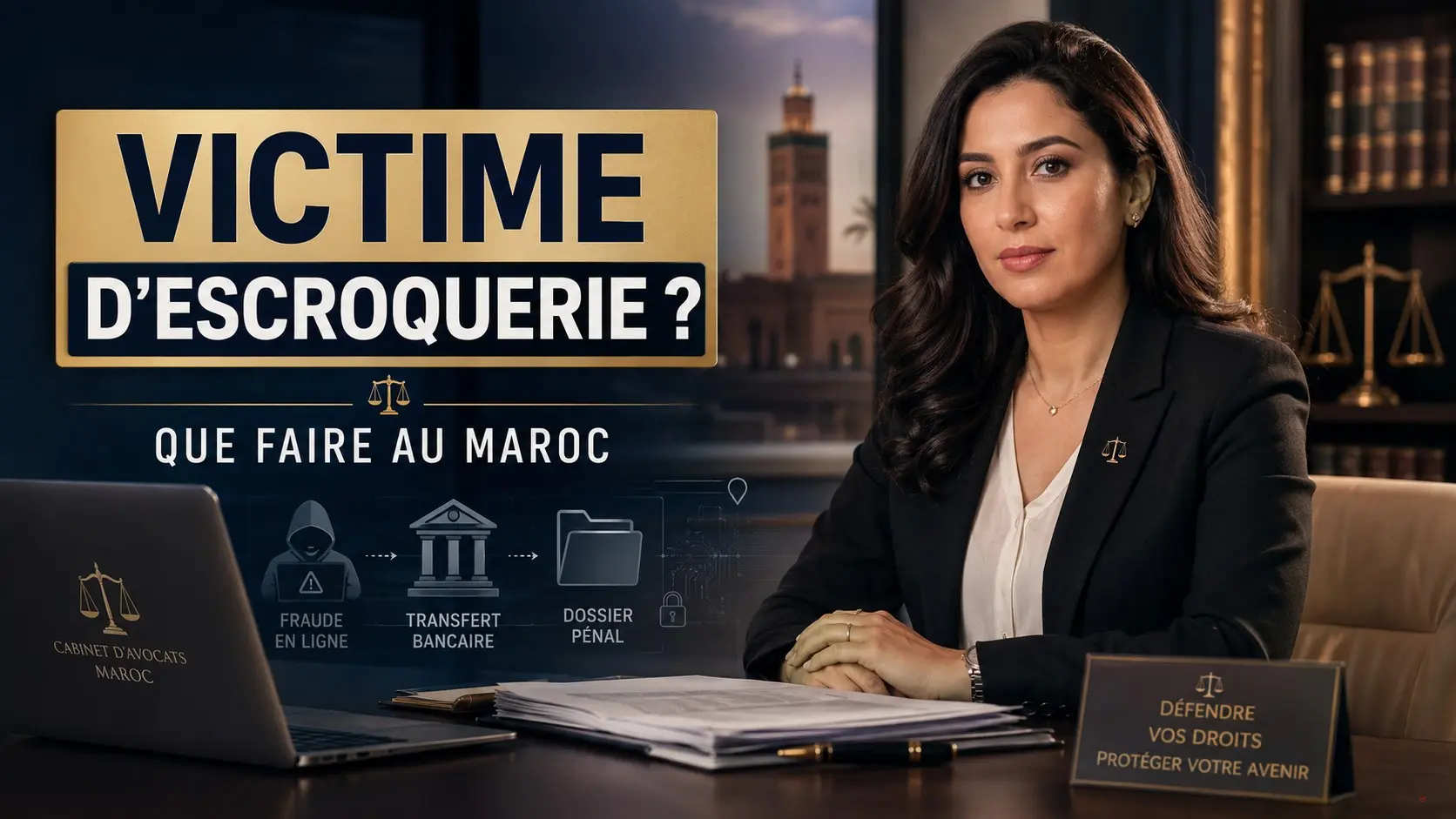
Être victime d’une escroquerie ne se résume pas à une perte d’argent. C’est souvent une épreuve violente, accompagnée de colère, de confusion, de honte et d’inquiétude. Dans ces moments, de nombreuses victimes ne savent pas par où commencer. Elles se demandent s’il est encore possible d’agir et, surtout, si la loi marocaine leur permet de faire valoir leurs droits et, dans certains cas, de récupérer les sommes perdues.
Dans cette page, Maître Amal Anouide, forte de plus de 13 ans d’expérience, vous propose un guide clair pour mieux comprendre les affaires d’escroquerie au Maroc, identifier les démarches à entreprendre sans tarder et évaluer les recours juridiques possibles. L’objectif n’est pas seulement de vous informer, mais aussi de vous aider à prendre la bonne décision au bon moment.
What constitutes fraud under Moroccan law?
L’escroquerie est une infraction sanctionnée par le Criminal Law marocain, notamment par l’article 540 du Code pénal marocain. En termes simples, elle consiste pour une personne à utiliser des manœuvres frauduleuses, de fausses qualités, des promesses mensongères ou tout autre procédé trompeur afin d’amener une victime à remettre volontairement de l’argent, un bien, un document ou un avantage.
In other words, the victim hands over the property or money seemingly willingly, but their consent was obtained through deception. This is precisely what distinguishes fraud from other similar offenses. A rigorous analysis of the facts is therefore essential, as not every financial or commercial dispute automatically constitutes fraud.
Difference between fraud, theft, and breach of trust
Ces notions sont souvent confondues, alors qu’elles correspondent à des situations juridiques distinctes.
Theft consists of taking something belonging to another person without their consent. Fraud, on the other hand, involves the victim handing over the property or money themselves, but under the influence of deception. Breach of trust occurs when property or money has been legally entrusted to the recipient but is then misappropriated or used in bad faith by the person who received it.
A simple example: if someone takes your phone without your consent, it could be considered theft. If this person convinces you to invest in a fictitious project and you give them money, the situation could be considered fraud. If you entrust them with a sum of money for a specific purpose and they misappropriate it, the charge could be breach of trust.
The constituent elements of fraud
For a case to be legally classified as fraud, several elements must be present.
First, there must be evidence of fraudulent maneuvers or deceptive means: forged documents, false identity, false promises, or a staged event designed to inspire confidence. Second, there must be an intent to deceive, meaning the will to induce the victim to hand over property or money. Finally, this deception must have actually resulted in the handing over of the money, property, or document, causing real harm to the victim.
In practice, the strength of the case largely depends on the ability to demonstrate these elements by means of consistent, relevant and well-presented evidence.
The most common forms of fraud in Morocco
Fraud cases in Morocco today take many different forms. Some are classic, while others are linked to digital tools and new consumer habits.
Online scam
Electronic fraud has become particularly common. It includes fake sales sites, non-existent promotional offers, phishing messages aimed at stealing bank details, fictitious job offers, fake profiles on social networks, and romance scams designed to extort money from the victim.
Real estate scam
Dans le domaine immobilier, les préjudices peuvent être considérables. Il peut s’agir de la vente d’un bien par une personne qui n’en est pas propriétaire, de l’utilisation de faux documents de propriété, de projets immobiliers fictifs ou encore de la perception d’avances pour des opérations dépourvues de base réelle.
Business transaction fraud
In business relationships, fraud can take the form of fake investments, fictitious contracts, simulated orders, deceptive bank transfers, or unrealistic promises of return designed to obtain funds.
Impersonation of quality or function
Some scams rely on the usurpation of a quality or function: fake public agent, fake intermediary, fake administrative manager, or person claiming to have influential relationships to resolve a case in exchange for payment.
Have you been the victim of fraud? Here are 5 steps to take immediately
In the event of fraud, the first reactions are often crucial. You must act quickly, but methodically.
- Keep calm and gather all the evidence: WhatsApp messages, emails, screenshots, transfer receipts, contracts, advertisements, phone numbers, bank details, recordings if they are usable.
- Cut off all contact with the scammer: do not send any more money and avoid continuing exchanges that could worsen your losses.
- Report the facts to the appropriate authorities: police, royal gendarmerie or file a complaint, depending on the nature of the case.
- Avoid publishing all the details of the case on social media: this can disrupt the investigation or allow the perpetrator to adapt their defense.
- Consultez rapidement un specialist lawyer : c’est la meilleure manière de qualifier juridiquement les faits, de protéger vos intérêts et de structurer votre dossier.
What evidence is needed to establish fraud?
In this type of case, evidence plays a central role. The earlier you act, the greater your chances of preserving useful evidence.
The most frequent evidence is:
- WhatsApp or SMS conversations
- Email exchanges
- Bank transfer receipts
- Account statements
- Written contracts, promises or commitments
- Screenshots of ads or profiles
- The documents submitted by the alleged perpetrator
- Testimonies from people who witnessed the events
- The recordings, when they can be legally discussed or produced
La valeur probatoire de chaque pièce dépend toutefois du contexte. Un avocat peut vous aider à déterminer quels éléments sont réellement utiles et comment les présenter efficacement.
How to file a fraud complaint in Morocco?
Déposer une plainte pour escroquerie au Morocco suppose d’abord de reconstituer les faits avec précision et de préparer les justificatifs disponibles. Selon la situation, vous pouvez vous adresser à la police, à la gendarmerie royale ou présenter une plainte au procureur du Roi territorialement compétent.
Once a complaint is received, a preliminary investigation may be opened to hear the parties involved, verify the information provided, identify the accused, and determine the legal classification of the offense. If the evidence is sufficient, the case may be forwarded to the public prosecutor's office for a decision, and then potentially to the competent court or investigating judge, depending on the nature of the case.
In some cases, the victim may also seek compensation for their injury and request appropriate measures to protect their rights.
Can you get your money back after being scammed?
This is the most important question for most victims. The honest answer is that it is sometimes possible to recover all or part of the lost funds, or to obtain compensation, but this depends on several factors.
Parmi ces facteurs figurent la rapidité de réaction, la qualité des preuves, l’identification de l’auteur, la traçabilité des fonds et les mesures pouvant être prises pour protéger vos intérêts. Aucun professionnel sérieux ne doit promettre un résultat garanti. En revanche, une intervention rapide et juridiquement bien conduite peut nettement améliorer vos chances.
Why is hiring a specialist lawyer essential?
Dans une affaire d’escroquerie, l’avocat n’intervient pas uniquement au stade du procès. Son rôle commence dès l’analyse du dossier. Il vérifie si les faits relèvent bien de l’escroquerie au sens du Criminal Law marocain, ou s’ils correspondent plutôt à un abus de confiance, à un litige civil ou à un contentieux commercial.
He also helps you organize evidence, draft the complaint, follow the procedure before the prosecutor's office, assist you before the investigating judge if necessary, and formulate a claim for compensation tailored to the harm suffered. His involvement also helps avoid certain errors that could weaken your case.
If you believe your case is complex or urgent, an initial legal assessment can provide the clarity you need. Contact us to discuss your situation in complete confidentiality.
An experienced lawyer at your side: Attorney Amal Anouide
Maître Amal Anouide, à travers avocatMoroccoain.com, accompagne les victimes d’escroquerie au Maroc avec sérieux, confidentialité et rigueur. Forte de plus de 13 ans d’expérience, elle intervient dans l’analyse du dossier, la qualification juridique des faits, le dépôt des démarches nécessaires et le suivi du contentieux jusqu’aux étapes utiles à la défense de vos droits.
Whether you are In Morocco ou à l’étranger, et que votre dossier concerne une escroquerie en ligne, une fraude bancaire, une escroquerie immobilière, une usurpation de qualité ou un montage frauduleux plus complexe, l’objectif reste le même : vous offrir un accompagnement juridique fiable, clair et adapté à votre situation.
Master Amal Anouide et son équipe sur avocatmarocain.com sont à votre disposition pour vous orienter. Réservez votre première Legal consultation et engagez les démarches nécessaires pour défendre vos droits.
Frequently Asked Questions about Fraud Cases
How long does a fraud case take in Morocco?
The duration varies depending on the complexity of the case, the number of people involved, the availability of evidence, the identification of the perpetrator, and the progress of the investigation. Some cases move quickly, while others require more time.
What is the cost of a lawyer in a fraud case?
Fees depend on the nature of the case, its level of complexity, the amount at stake, and the work required. They are set transparently during the initial consultation.
Can I take action if I live outside of Morocco?
Oui. Dans de nombreuses situations, il est possible de mandater un lawyer in Morocco afin d’engager les démarches nécessaires, sous réserve des documents utiles et des formalités applicables à votre dossier.
What is the penalty for fraud in Morocco?
Fraud is punishable under the Moroccan Penal Code by penalties that may include imprisonment and a fine. The specific sentence depends on the facts established, the circumstances of the case, and the court's assessment.
Is every breach of contract a fraud?
No. A simple failure to perform a contract does not automatically constitute fraud. It is necessary to demonstrate the existence of fraudulent maneuvers, an intent to deceive, and a discount obtained through this method.
Conclusion
Being the victim of fraud is a difficult ordeal, but hesitation shouldn't prevent you from taking action. The sooner you intervene, the greater your chances of preserving your evidence, building your case, and effectively defending your rights.
Si vous avez été victime d’une escroquerie au Maroc, une Legal consultation adaptée peut constituer la première étape décisive. Ne laissez pas le doute retarder votre réaction. Contactez-nous par téléphone ou via WhatsApp pour obtenir une assistance confidentielle avec une avocate expérimentée.
This article provides general information for guidance purposes only and does not constitute binding legal advice. For a precise analysis of your situation, please contact us directly.