Since the promulgation of the current Family Code, the Moudawana, in 2004, Morocco has undergone a major legal evolution in the area of family law. Recent judicial statistics indicate that more than 100,000 marriage dissolution proceedings are processed annually by the Kingdom's courts. Among these, divorce based on discord, legally known as Chiqaq, represents the vast majority of petitions filed with family court judges.
Face à la complexité des textes et aux enjeux personnels qui entourent une séparation, l’accompagnement par un avocat divorce est devenu une démarche essentielle. Se présenter seul devant la justice familiale marocaine peut rapidement s’avérer éprouvant, surtout lorsque des questions de patrimoine, de pension ou de garde des enfants sont en jeu. Un professionnel du droit expérimenté saura protéger vos intérêts financiers, sécuriser vos biens et défendre vos droits fondamentaux, notamment en matière de garde des enfants, ou Hadana.
Que vous envisagiez une séparation à l’amiable par mutual consent ou que vous soyez confronté à une procédure contentieuse, comprendre le cadre légal marocain constitue la première étape vers une démarche plus sereine. Ce guide présente les règles applicables à la dissolution du wedding in Morocco, les juridictions compétentes, les difficultés juridiques les plus fréquentes ainsi que les principales étapes à suivre pour mener votre dossier dans de bonnes conditions.
The role of your divorce lawyer in light of the specificities of Moroccan law
The Moroccan family law possède des caractéristiques propres. Il combine des règles de civil law moderne avec des principes issus de la jurisprudence islamique, notamment du Fikh malékite.
The competent courts
Au Maroc, les affaires familiales ne relèvent pas des tribunaux administratifs. Elles sont traitées par les Tribunaux de première instance, plus précisément par les sections de la justice de la famille, aussi appelées Chambres du statut personnel et successoral.
The territorially competent jurisdiction is generally that of:
- From the marital home.
- From the wife's home or place of residence
- From the place where the marriage contract was concluded.
The legislation in force: the Moudawana
Law No. 70-03, the Family Code, governs all separation procedures in Morocco. It provides for several forms of divorce:
- Divorce under judicial supervision, or Talaq: initiated by the husband, it requires the prior authorization of the judge.
- Divorce requested by the wife, or Tatliq: it is based on specific causes, such as harm, lack of maintenance or absence.
- Divorce for discord, or Chiqaq: provided for by Article 94, this is the most commonly used procedure, as it does not require proof of fault. Either spouse can request it.
- Divorce by mutual consent: this is the fastest way when the spouses agree on all the consequences of the breakup.
- Divorce with compensation, or Khol': the wife pays financial compensation in order to obtain the dissolution of the marital bond.
The mandatory conciliation attempt
One of the distinctive features of Moroccan family law is the requirement to attempt reconciliation. The court must summon both spouses to a closed hearing in chambers to try to preserve the marital bond. When the couple has children, two attempts at reconciliation, spaced at least thirty days apart, are mandatory.
The 5 major legal problems encountered during a divorce in Morocco
Même lorsqu’un dossier paraît solide, la dissolution d’un mariage soulève souvent des difficultés. Voici les cinq principaux obstacles rencontrés par les justiciables au Maroc, ainsi que les solutions à envisager.
1. The conflict over child custody, or Hadana
- Le problème : la garde des enfants devient fréquemment un sujet de tension, voire de chantage. La loi marocaine fixe un ordre de priorité : la mère, puis le père, puis la grand-mère maternelle. Le droit de visite du parent qui n’a pas la garde peut également entraîner des litiges répétés.
- The solution: document precisely your ability to provide a stable environment for the child: housing, income, availability, living conditions. It is also recommended to ask the judge to specify very clear visitation days and times in the court order, in order to limit future misinterpretations and conflicts.
2. The division of property acquired during the marriage, according to Article 49
- The problem is that in Morocco, the default legal regime is separation of property. In the absence of a specific contract relating to the management of acquired assets, called Kadd wa Sia'ya, it can be very difficult to prove one's financial contribution or contribution through domestic work to the other spouse's assets.
- The solution: keep all proof of your contributions: bank transfers, invoices, notarized deeds, statements, and any other relevant documents. If no distribution agreement was signed at the time of the marriage ceremony, a separate civil procedure will need to be initiated to claim your share.
3. The determination and collection of alimony, or Nafaka
- The problem is that the amount set by the judge for child or spouse support, particularly during the statutory retirement period or Idda, is often contested. The recipient may consider it insufficient, while the payer may deem it excessive. Added to this is a frequent difficulty: non-payment of the support.
- The solution: provide clear documentation of your actual expenses and, where possible, of your spouse's income. In case of non-payment, it is possible to file a criminal complaint for abandonment of family, an offense punishable by imprisonment in Morocco.
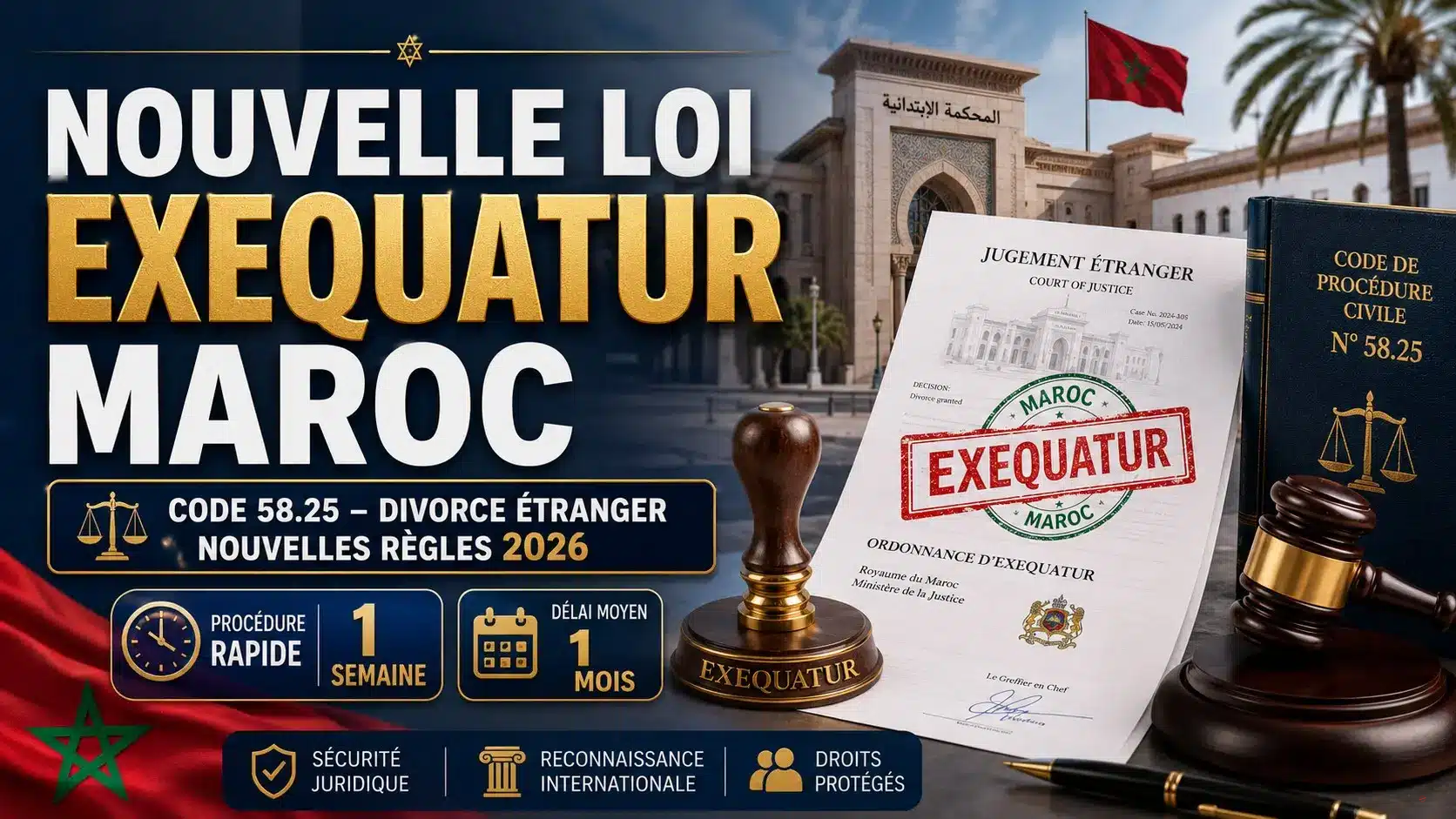
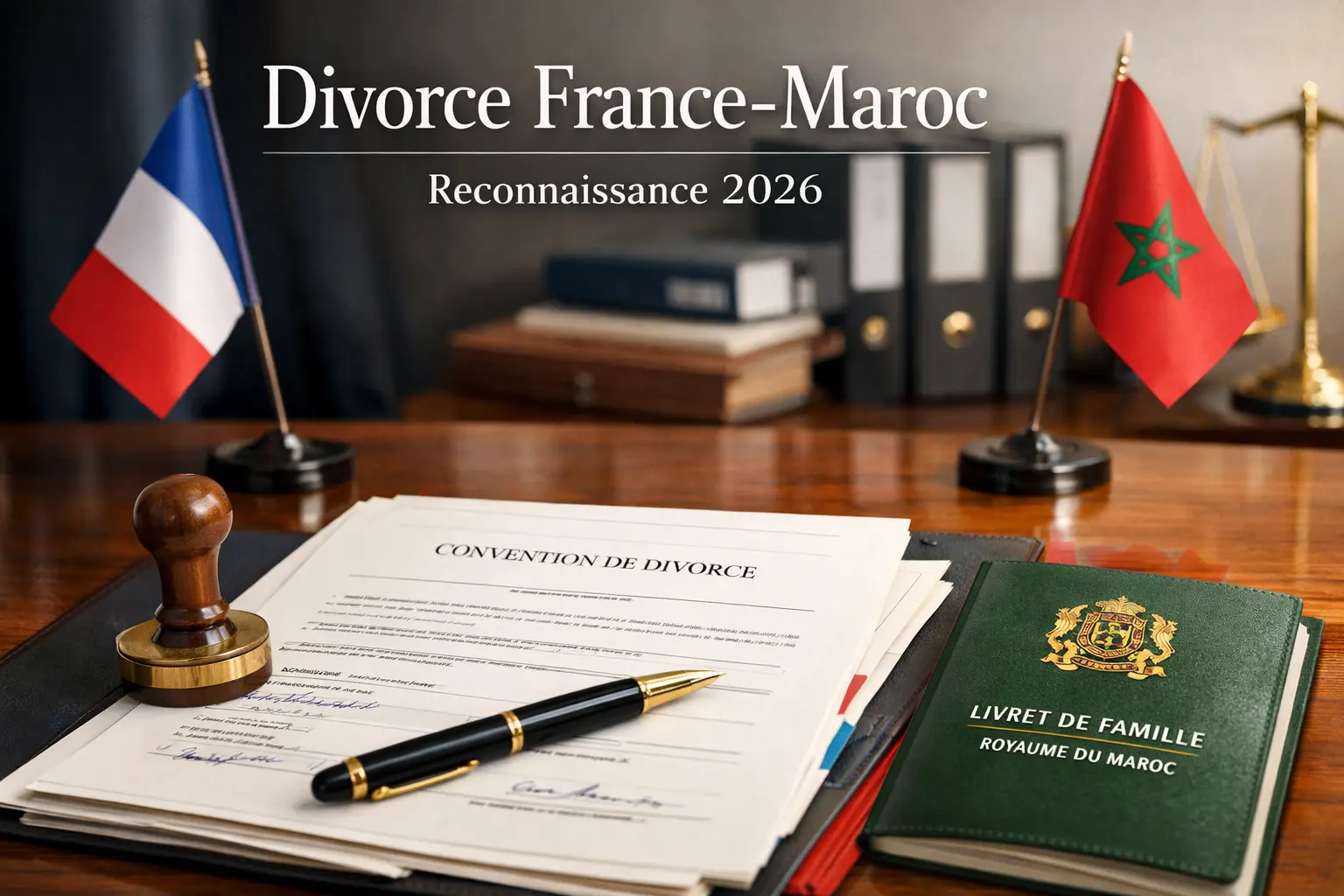
4. Divorce of Moroccans residing abroad and the exequatur procedure
- Le problème : les Marocains résidant à l’étranger, ou MRE, qui divorcent devant un tribunal étranger, en France, en Belgique ou ailleurs, pensent parfois que leur jugement est automatiquement reconnu au Maroc. Ce n’est pas le cas.
- The solution: it is essential to initiate exequatur proceedings before the Moroccan court. This process gives the foreign judgment legal force within the national territory and updates the Moroccan civil registry.
5. Domestic violence and proof of harm
- The problem: obtaining a divorce based on harm, particularly to claim substantial damages, requires concrete evidence of physical, psychological, or material abuse. However, this evidence is often difficult to gather when the abuse occurs within the privacy of the home.
- The solution: gather a body of evidence: medical certificates, bailiff's reports, witness statements, including those from relatives, police reports, or any other relevant document. Filing a criminal complaint concurrently can significantly strengthen the civil case.
Practical steps: how to proceed with a divorce lawyer?
To approach this procedure with greater clarity, here are the main steps of a divorce before the Moroccan justice system.
Step 1: The initial strategic consultation
La première démarche consiste à consulter votre conseil juridique. Lors de ce rendez-vous, vous déterminerez la stratégie la plus adaptée à votre situation : divorce par consentement mutuel ou procédure de discorde, Chiqaq. Vous évaluerez également vos droits éventuels concernant le logement, la Mout’a, la pension alimentaire et la garde des enfants.
Step 2: Preparing the file and submitting the application
You will need to gather several official documents, including:
- The original of the notary's marriage certificate.
- A copy of the National Identity Card, or CIN.
- A certificate of residence.
- Extracts from the children's birth certificates.
- Proof of income: payslips, bank statements, tax returns.
Your counsel will then draft a reasoned application to initiate proceedings, which will be filed with the registry of the competent family court.
Step 3: Conciliation hearings
Once the first hearing is scheduled, the physical presence of both spouses is mandatory. The judge will attempt to reconcile them. If the disagreement persists, the failure of the reconciliation will be recorded in the minutes.
Step 4: Determining rights and the final judgment
Le tribunal accorde un délai à l’époux pour consigner à la caisse du tribunal le montant des droits financiers dus à l’épouse et aux enfants. Une fois cette somme déposée, la juridiction prononce la dissolution définitive du mariage. Les Adouls, notaires de droit musulman, rédigent ensuite l’acte de divorce sous la supervision du juge.
Timeframes and costs
A divorce proceedings par consentement mutuel peut aboutir en 1 à 2 mois. Une procédure contentieuse de type Chiqaq dure généralement entre 3 et 6 mois. Les honoraires varient selon la renommée du cabinet, la ville — Casablanca et Rabat étant généralement plus onéreuses — ainsi que la complexité du dossier. Ils peuvent aller de 5 000 MAD à plus de 30 000 MAD.
Frequently Asked Questions (FAQ)
1. How much does a divorce lawyer cost in Morocco?
Legal fees are not capped. They depend on the complexity of the case and the lawyer's experience. For a divorce by mutual consent, you should generally expect to pay between 5,000 and 10,000 dirhams. For a complex contested case, fees can reach 15,000 to 30,000 dirhams, or even more. It is advisable to sign a fee agreement at the outset of your relationship with the lawyer.
2. Is it mandatory to use a divorce lawyer for an amicable separation?
Techniquement, la loi marocaine permet aux justiciables de se représenter eux-mêmes devant le tribunal de la famille. Toutefois, faire appel à un avocat divorce reste fortement recommandé, même en cas d’accord amiable. Il veillera à ce que l’accord protège vos droits futurs et ne comporte aucune clause abusive susceptible d’être rejetée par le juge.
3. What is the average duration of a divorce due to discord, or Chiqaq?
Article 97 of the Moudawana stipulates that the Chiqaq procedure must be completed within a maximum of six months from the filing of the petition. In practice, when the summonses are properly served, the judgment is often issued within three to five months.
4. How does the Moroccan judge calculate child support, or Nafaka?
The family court judge considers three main criteria established by law: the income and financial situation of the person obligated to pay, the actual needs of the children or spouse, and the price level in the local market. The alimony typically covers food, clothing, education, and medical expenses.
5. Who usually gets custody of the children, or Hadana, in Morocco?
L’article 171 du Family Code accorde la priorité à la mère. Si celle-ci est déchue de son droit, pour des raisons graves affectant l’intérêt de l’enfant ou en cas de remariage dans certaines conditions strictes, la garde revient au père, puis à la grand-mère maternelle. Dans tous les cas, l’intérêt supérieur de l’enfant reste le critère central d’appréciation du juge.
6. Is a divorce pronounced abroad valid in Morocco?
Non, pas automatiquement. Si vous êtes Marocain ou Marocaine et que vous avez divorcé dans votre pays de résidence, par exemple en France, en Espagne ou au Canada, vous devez engager une procédure d’exequatur au Maroc. Sans cette validation par un juge marocain, vous serez toujours considéré comme marié aux yeux de l’administration marocaine.
Conclusion: Secure your future with a professional
La dissolution d’une union matrimoniale est une étape de vie délicate, à la fois éprouvante sur le plan émotionnel et complexe sur le plan juridique. Le système judiciaire marocain, bien qu’il ait été modernisé par la Moudawana, exige une bonne maîtrise des procédures, des délais et de la jurisprudence locale. Une erreur dans la rédaction d’une requête ou l’absence d’une preuve matérielle peut avoir des conséquences durables sur vos finances, votre patrimoine et votre relation avec vos enfants.
Hiring a competent divorce lawyer in Morocco goes beyond simply representing you in court. It's also a way to preserve your peace of mind. An experienced professional can advise you objectively, handle difficult negotiations, and support you until the final judgment is issued.
Ne laissez pas l’incertitude et l’anxiété guider vos décisions. Si vous envisagez d’engager une procédure ou si vous avez reçu une convocation du tribunal de la family, prenez les devants. Consultez un spécialiste du Family Law marocain afin d’analyser votre situation et de construire une stratégie juridique adaptée à vos intérêts futurs.