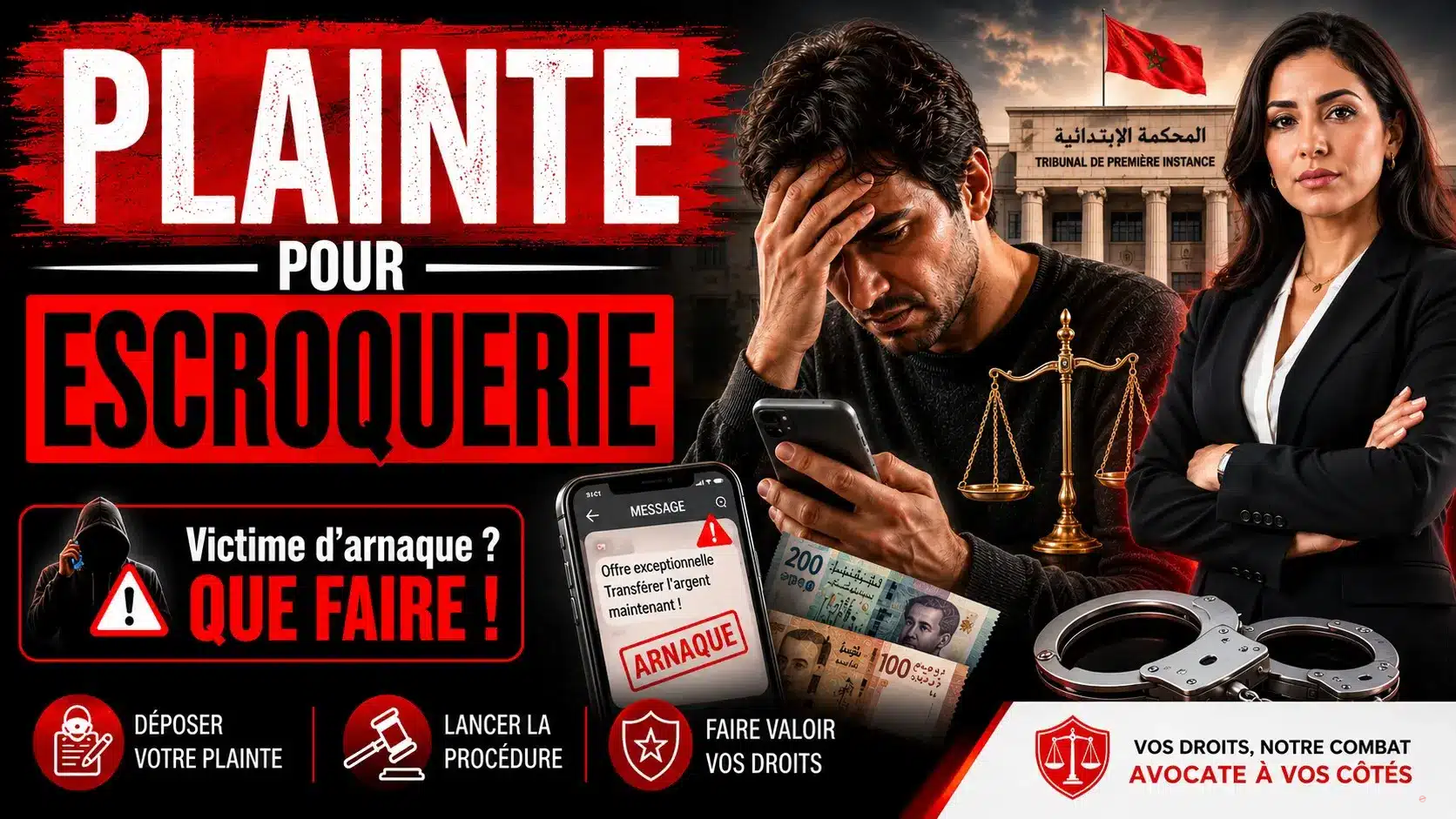
Nous savons qu’être victime d’une escroquerie est une expérience difficile et frustrante, surtout lorsqu’une personne a le sentiment d’avoir perdu son argent, sa confiance, ou les deux à la fois. Dans une telle situation, la première chose dont la victime a besoin est de comprendre clairement quoi faire, vers qui se tourner, et comment protéger ses droits sur le plan juridique sans confusion ni retard.
Fort de son expérience pratique au sein de son cabinet basé in Safi, Lawyer Amal Anouide This guide emphasizes that, in fraud cases, everything begins with a crucial first step: gathering evidence, drafting a precise complaint, and submitting it to the competent authority in a legally sound format. This guide will show you the simple and practical steps to file a fraud complaint in Morocco, enabling you to build a strong case for the judicial authorities.
Before we begin: does your case constitute fraud under the law?
Avant de déposer une plainte, il est important de vérifier que les faits dont vous avez été victime relèvent bien de l’escroquerie telle qu’elle est prévue par le Criminal Law marocain. Cette étape est fondamentale, car certains litiges sont de nature civile ou contractuelle, alors que d’autres réunissent clairement les éléments constitutifs de l’escroquerie prévus par Article 540 of the Moroccan Penal Code.
Master Amal Anouide recommande de ne pas qualifier trop rapidement tout litige financier d’escroquerie, car la qualification juridique exacte détermine l’autorité compétente et la stratégie de poursuite à adopter.
The material element: the use of fraudulent maneuvers
The material element consists of using fraudulent schemes designed to induce the victim to believe false statements, and then to hand over property, money, or a benefit based on this deception. Examples of such schemes include:
- To impersonate a person or professional that one is not (e.g., a civil servant, an official intermediary, or the representative of a fictitious project).
- Presenting false information regarding a non-existent investment, sale, or service.
- Using fake documents or fake data to convince the victim.
- To stage a project or operation that appears real when it is merely a means of extorting money.
- Commettre une escroquerie en ligne, notamment au moyen d’annonces trompeuses, de faux comptes ou de fraudes électroniques via les réseaux sociaux.
The intentional element: fraudulent intent
A simple dispute or broken promise is not enough. Clear fraudulent intent must also be demonstrated. In other words, the person targeted by the complaint must have known they were providing false information or deceiving the victim with the aim of unduly obtaining money, property, or an advantage. Fraudulent intent can be inferred from the alleged perpetrator's behavior (multiple lies, disappearance after receiving money, changing phone numbers, or using a false identity).
The result: the transfer of funds or property following the deception.
The third element lies in the actual occurrence of the harm, that is, the fact that the victim handed over a sum of money, property, a document, or a benefit as a result of the deception suffered. If no such handover took place, the legal classification of the facts may be different.
The competent authorities to receive a fraud complaint in Morocco
If you are wondering where to go to file a complaint, the answer depends on the nature of the case and how you wish to initiate the procedure.
First option: The police or the Royal Gendarmerie (judicial police)
Contacting the police or the Royal Gendarmerie is one of the most common approaches. This option is particularly suitable when:
- The events are recent and require swift action.
- It is necessary to hear from witnesses or to establish certain facts.
- There is a risk that the person involved will flee or disappear.
Second option: The public prosecutor's office (King's Prosecutor)
It is also possible to file a written complaint directly with the Public Prosecutor at the competent court of first instance. This option is particularly relevant when you have a well-drafted complaint, have gathered well-organized evidence, and wish to present the facts in a legally sound manner from the outset.
The complete steps to file a fraud complaint: a practical guide
Si vous cherchez la bonne méthode pour déposer une plainte dans les règles, voici les étapes pratiques que recommande Maître Amal Anouide afin d’éviter les erreurs les plus fréquentes.
Step 1: Gather all evidence and means of proof
The more documented your case, the easier it will be for the justice system to understand the facts. Keep the evidence in its original form.
- Copies of WhatsApp, Messenger or email conversations.
- Bank transfers, payment receipts or proof of deposit (Wafacash, Western Union).
- Written contracts or agreements, even simple ones.
- Screenshots of the accounts or ads used.
- The contact details of witnesses and any information that could help identify the person involved.
Step 2: Draft a legally sound complaint (with template)
The complaint must be clear, precise, and based on facts, not emotions. Here is a simplified template that you can adapt:
À Monsieur le Procureur du Roi près le Tribunal de première instance de [Ville]
Subject: Complaint for fraud
Mr. Public Prosecutor,
I, the undersigned:
- Full name: [Votre nom complet]
- National Identity Card Number: [Numéro]
- Address : [Votre adresse complète]
- Phone : [Votre numéro]
I have the honor of filing a complaint against:
- Name : [Nom de la personne visée, si connu]
- Address or information: [Informations disponibles]
Due to the following facts:
En date du [date], la personne visée a [décrire précisément comment elle vous a contacté, quelles promesses elle a faites, et comment elle vous a convaincu]. Je lui ai remis la somme de [montant] dirhams sur la base de ces déclarations. Il m’est ensuite apparu qu’il s’agissait d’une escroquerie, notamment après [indiquer les éléments révélant la tromperie : disparition, refus d’exécuter, etc.].
Je joins à la présente plainte les pièces suivantes à l’appui de mes déclarations : [Liste des preuves : conversations, virements, etc.].
Consequently, I request the opening of an investigation into the facts presented and the taking of appropriate legal measures, while reserving the right to seek compensation for the harm suffered as a civil party.
Please accept, Mr. Public Prosecutor, the expression of my highest consideration.
Signature : [Votre nom]
Date : [Date]
Step 3: File the complaint and obtain proof of filing
Once you have prepared your complaint, file it with the appropriate authority. Be sure to:
- Request the complaint registration number.
- Obtain a receipt or proof of filing.
- Keep a copy of the complaint with the registry office stamp.
Step 4: Complaint Follow-up
After the complaint is filed, a preliminary investigation begins. You may be summoned for a formal hearing, as may the accused person and any witnesses. The case will then be forwarded to the public prosecutor's office to decide whether to initiate proceedings in court.
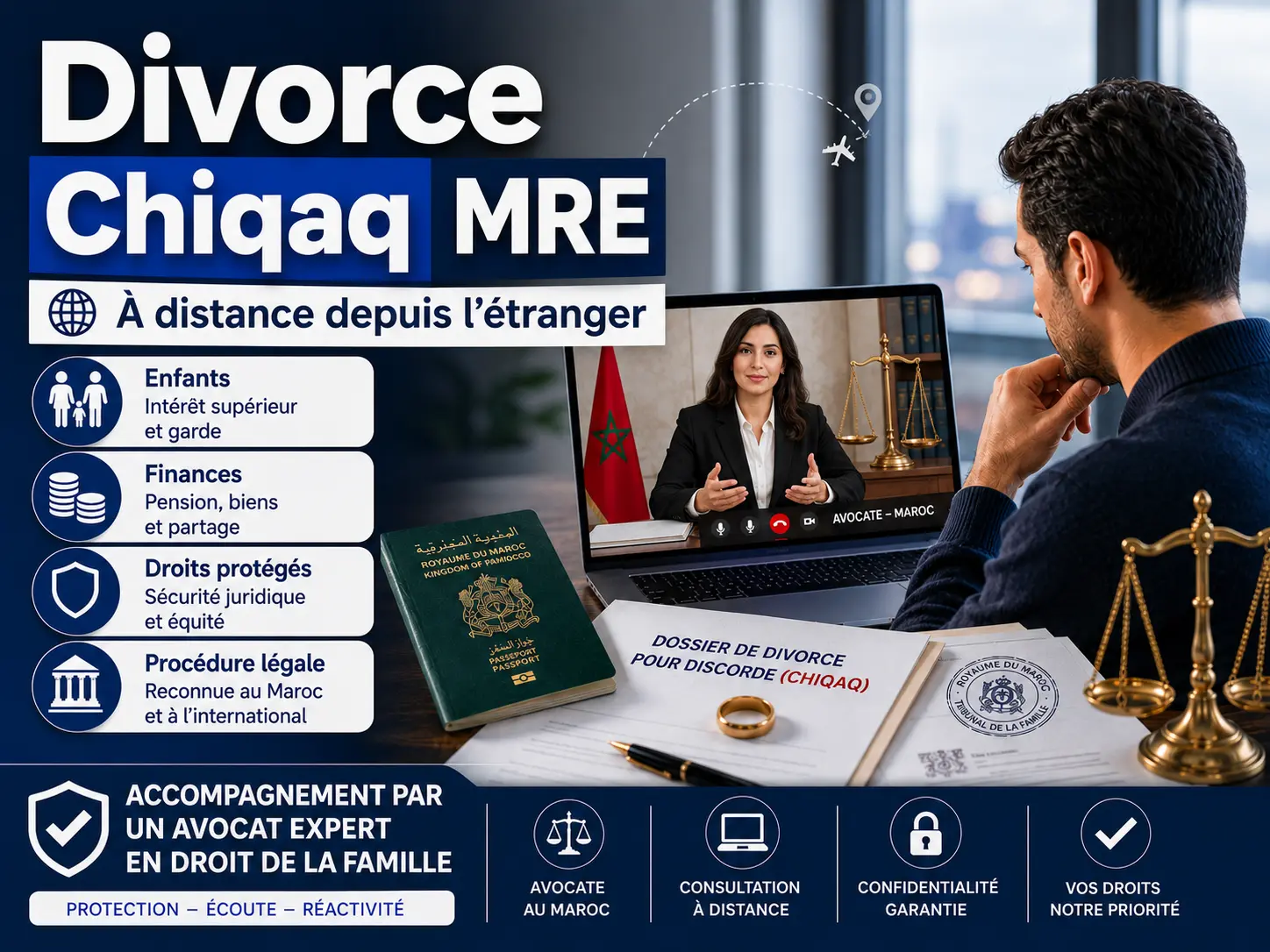
Victims abroad (MRE) or outside of Safi: How to act remotely?
Geographical distance should not be an obstacle to justice. Whether you are a Moroccan residing abroad (MRE) or live in another Moroccan city, it is not always necessary to physically travel there immediately to file a complaint.
Thanks to a legal power of attorney (établie au consulat pour les MRE ou légalisée au Morocco), vous pouvez mandater le cabinet de Maître Amal Anouide à Safi. En tant que cabinet individuel dédié exclusivement à la défense de vos intérêts, Maître Anouide se chargera de rédiger la plainte, de la déposer en votre nom auprès du Procureur du Roi, et de suivre rigoureusement les investigations de la police judiciaire pour s’assurer que vos droits sont préservés, malgré la distance.
Common mistakes to avoid so as not to compromise your rights
- Delaying filing the complaint: The longer you wait, the more likely the evidence (especially digital) is to disappear.
- Writing an overly emotional complaint: An effective complaint lays out the facts precisely (Who, what, when, where, how) and is based on evidence, not anger.
- Neglecting evidence collection: Going to the police without an organized file weakens your case from the outset.
The role of a lawyer: When should you seek legal assistance?
Dans de nombreuses situations, l’intervention from a lawyer joue un rôle déterminant. L’avocat qualifie précisément les faits, rédige la plainte de manière irréprochable, et assure le suivi du dossier auprès du ministère public pour éviter qu’il ne soit classé sans suite.
THE affaires d’escroquerie exigent rigueur et expertise juridique. Ne laissez pas la frustration vous empêcher d’agir. La loi est de votre côté, et la bonne première démarche est la clé pour faire valoir vos droits.
► Do you need help writing or filing your complaint?
Contactez dès maintenant le cabinet de Maître Amal Anouide (Safi) pour obtenir une consultation juridique spécialisée et une évaluation précise de votre situation.
Request a confidential consultation with Me Anouide
6. Frequently Asked Questions (FAQ): Your concerns, our expert answers
1. I am a Moroccan living abroad (MRE). Do I need to translate my supporting documents (WhatsApp messages, emails) if they are in French or another language?
Although the judicial police may initially consult documents in French during the investigation, the official language of Moroccan courts is Arabic. To ensure your evidence (contracts, text messages) is legally admissible before a judge, it must be certified and translated. The law firm of Maître Amal Anouide will coordinate this process for you from Safi.
2. The scammer used a fake name and profile. Is there any chance a complaint will be successful?
Yes, absolutely. In this case, we file a "complaint against an unknown perpetrator." The Moroccan Cybercrime Brigade has advanced investigative tools. A simple phone number (even a prepaid one), a bank account, or a Wafacash/Western Union transfer number allows us to trace the perpetrator back to their physical location through requests sent to telecom operators and banks.
3. What is the time limit (statute of limitations) for filing a complaint for fraud in Morocco?
In Moroccan law, l’escroquerie (Article 540) est classée comme un offenseThe limitation period for public prosecution is 4 years from the day the offense was committed. However, in digital matters, it is crucial not to wait: electronic evidence is quickly erased and stolen money is rapidly laundered. Act within days of discovering the scam.
4. Can I withdraw my complaint if the scammer or his family decides to reimburse me?
Yes, this is a common situation. Under pressure from the police or the prosecutor, the perpetrator may offer to return the funds (the "Solh" or reconciliation). You can then file a "disclaimer" (التنازل). However, be aware that in criminal matters, the victim's disclaimer does not always stop the prosecution, but it constitutes a significant mitigating circumstance for the fraudster. Your lawyer will ensure that you recover your funds. Before to sign anything.
5. How does legal representation for a Moroccan living abroad (MRE) actually work?
The process is simplified to save you the trip:
- Vous rédigez une procuration spéciale au Consulat du Maroc de votre pays (ou via un notaire local avec Apostille).
- You send us the original by express mail (DHL/FedEx).
- Upon receipt, Maître Amal Anouide legally represents you before the King's Prosecutor, the judicial police and the court, and keeps you informed of each development in real time.
Warning : Ce guide fournit des informations générales à titre indicatif et ne remplace pas une Legal consultation personnalisée tenant compte des particularités de votre dossier.