

Divorce in the Moroccan Moudawana in 2026: A complete guide to the rules and procedures.

Key points: What you need to remember
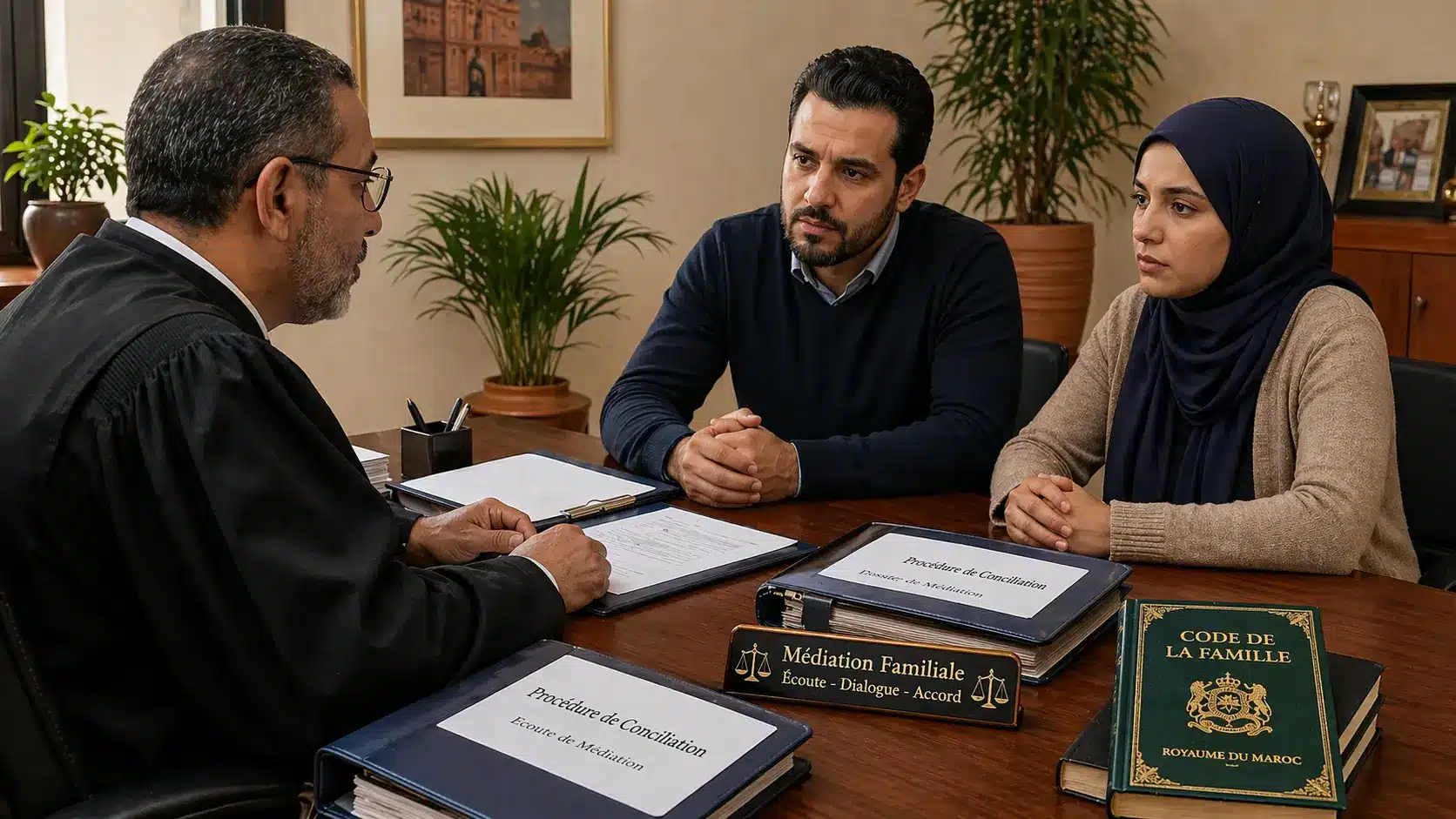
  1. Mandatory judicial supervision: No dissolution of marriage can be recorded without the prior authorization of the family court.
  2. Predominance of discord (True) : This procedure remains the most requested because it allows a decision on the divorce to be made within a maximum period of six months.
  3. Priority to reconciliation: The judge must make every effort to reconcile the spouses, with two attempts spaced 30 days apart in the presence of children.
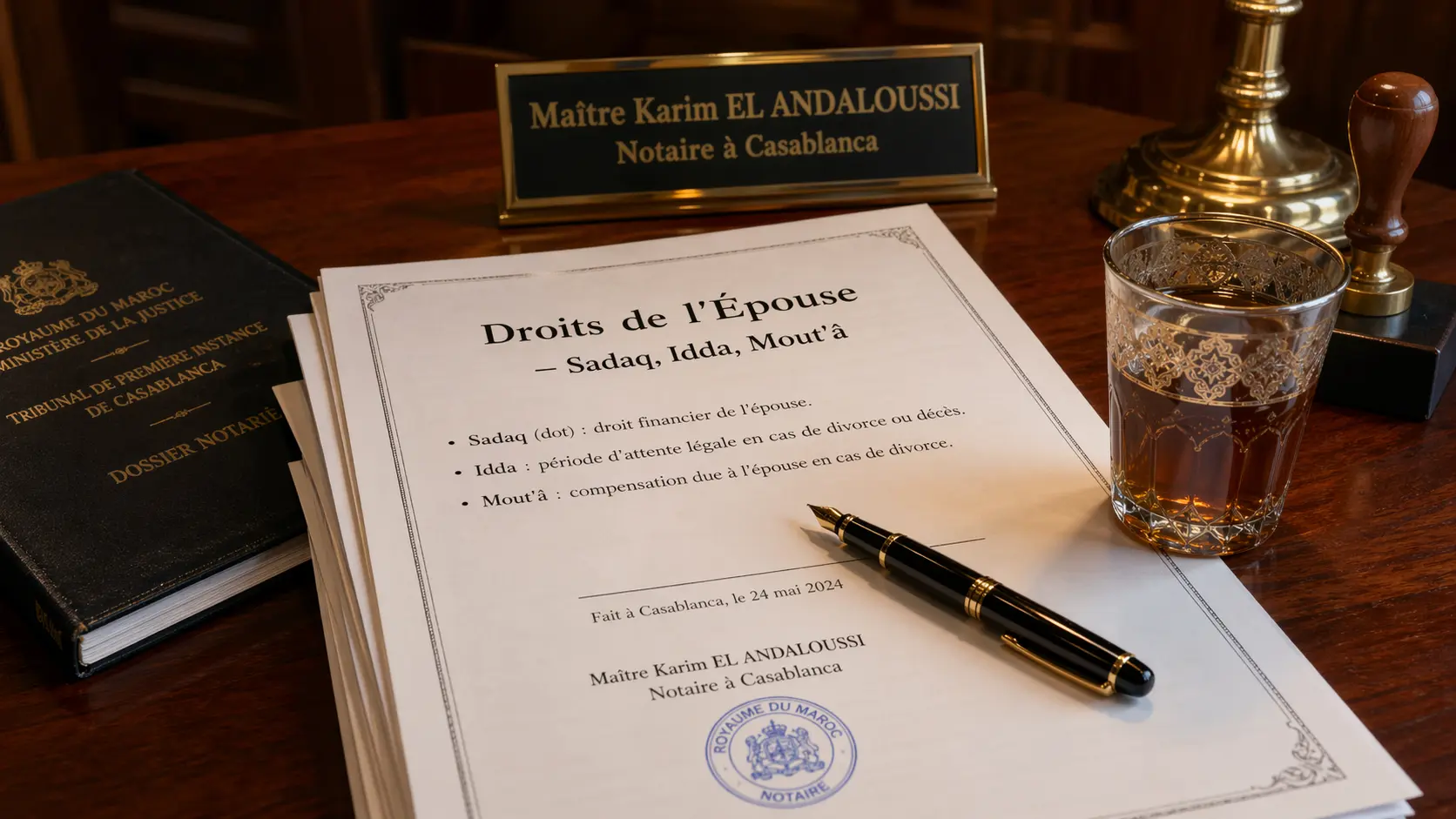
  4. Financial protection for the wife: The rights include the remainder of the Charity, the vacancy pension (She) and a gift of consolation (Mout’â).
  5. The best interests of the child: The guard (And now) and housing are priority obligations and separate from alimony.
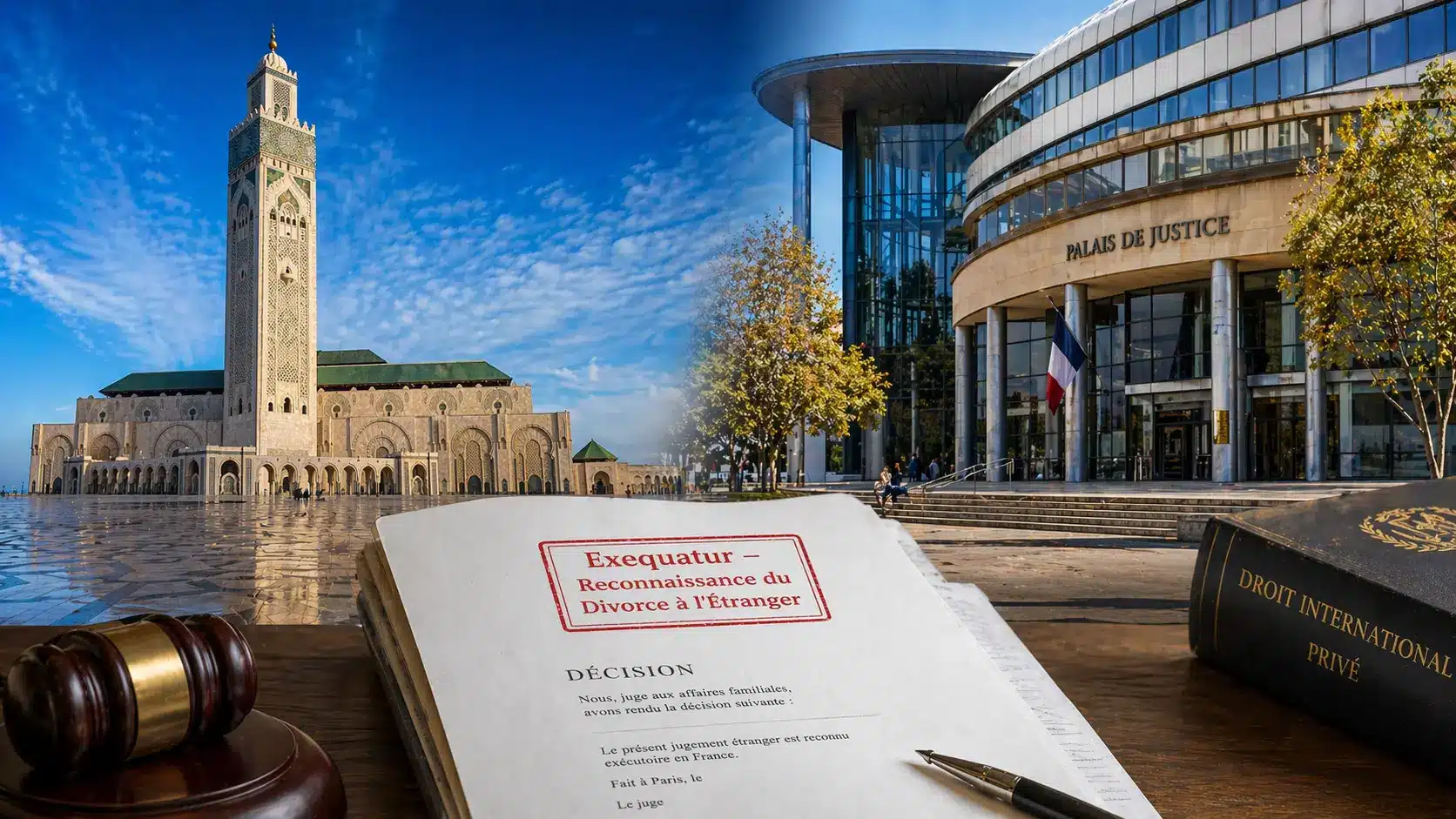
  6. Simplified recognition for Moroccans residing abroad (MRE): THE divorces prononcés à l’étranger sont exécutoires au Maroc après une procédure d’exequatur.

Moudawana Reform 2026

Divorce in the Moudawana in Morocco is no longer perceived as a simple unilateral separation, but as a regulated dissolution of the marriage contractSince the historic reform of the Moudawana by the Law No. 70-03, la législation marocaine cherche à équilibrer les droits des conjoints tout en érigeant la protection des enfants en priorité nationale. En 2026, alors que la société évolue et que de nouveaux ajustements législatifs sont débattus, comprendre les nuances entre le divorce par discorde, le consentement mutuel ou le divorce pour préjudice est essentiel pour tout justiciable. Ce guide vous offre une analyse précise des étapes légales pour naviguer sereinement dans le système judiciaire marocain.

1. The general framework for the dissolution of marriage

La Moudawana stipule que la dissolution of marriage résulte soit du décès, de la résiliation, du divorce sous contrôle judiciaire, ou du divorce judiciaire.

The principle of exception

Moroccan law specifies that recourse to divorce should only take placeexceptionallyIn accordance with the "lesser evil" principle, the court prioritizes the court to avoid family breakdown. In 2026, judicial practice confirms that the court acts as a social regulator, always favoring conciliation whenever possible.

Jurisdictional competence

Divorce cases fall under the jurisdiction of the family justice sections within the courts of first instance. The public prosecutor's office plays a key role in ensuring the correct application of the law.

How to get a divorce in Morocco in 2026

2. The Divorce for Discord (Chiqaq) : The flagship procedure

Divorce for reasons of discord (Chiqaq) est défini par les articles 94 à 97 du Family Code.

Read also
Specialized Divorce Lawyer in Morocco: Services & Procedures 2026

Definition and legal framework

It is initiated when a deep disagreement arises between the spouses, making cohabitation impossible. The advantage of this procedure is its speed: the court must rule within a certain timeframe. six months.

The crucial stage of reconciliation

The court will use all available means to resolve the dispute, including appointing arbitrators or a family council. If the arbitrators successfully reach a settlement, a report is drawn up and the court acknowledges it. If the arbitrators fail, the court will grant the divorce and rule on any outstanding alimony or child support.

3. Judicial Divorce (Tatliq): For specific reasons

L’épouse peut solliciter un Judicial divorce pour des motifs précis énumérés à l’article 98 :
  1. Failure to comply with the conditions of the marriage certificate: If the spouse does not respect a specific clause (e.g., no polygamy).
  2. Damage suffered: Any behavior that is shameful or contrary to good morals (violence, abuse).
  3. Lack of maintenance: When the spouse refuses to pay alimony.
  4. Absence of spouse: If the spouse is absent from the home for more than a year without a valid reason.
  5. Redhibitory defect: Serious illnesses that endanger the health of the spouse.
  6. Continence oath: If the husband neglects his wife for more than four months.

Which divorce to choose in Morocco

4. Divorce by Mutual Consent and by Khul'

The Family Code allows spouses to end their union amicably.

Mutual Consent (Article 114)

The spouses can agree on the principle of separation, with or without conditions, provided that these do not harm the children. The court attempts a final reconciliation before authorizing the separation.

Divorce with compensation (Khol')

Here, the wife is offering financial compensation (compensation) to her husband to obtain a divorce.

  • Protection : If the wife is a minor, compensation requires the agreement of her guardian.
  • Abuse : If the divorce by Khol' is the result of duress, the wife can request the return of the compensation.
  • Priority to children: La compensation ne doit jamais être prélevée sur les droits ou la pension alimentaire des enfants.

5. Financial consequences and children's rights

Once the divorce is finalized, the court determines the financial obligations.

The rights of the wife

They include:

  • The remainder of Charity.
  • The pension for the period of widowhood (She), with an average duration of three months.
  • The gift of consolation (Mout’â), assessed according to the duration of the marriage and the situation of the spouse.

Childcare (Hadana)

Custody is entrusted primarily to the mother, then to the father, then to the maternal grandmother. At 15, the child has the right to choose their heir.
  • Accommodation : The father has an obligation to provide decent housing for his children, separate from child support.
  • Alimony: It includes food, clothing, and medical care.

Getting your foreign divorce recognized in Morocco

6. Practical Elements and Procedural Guide

Comparative table of divorce types

Type of Divorce

Legal Basis

Initiative

Average Delay

Observation

Discord (Chiqaq)

Art. 94

One or both

6 months

The most frequent

Mutual Consent

Art. 114

The two spouses

Fast

Amicable agreement required

For Prejudice

Art. 99

The wife

Variable

Proof of damage required

Khol'

Art. 115

The wife

Variable

Financial compensation

Read also
Divorce Exequatur in Morocco: Timeframes, fees, and mandatory documents in 2026

Required documents (General file)

  • Original of the marriage certificate.
  • Copies of the spouses' national identity cards.
  • Extracts from the children's birth certificates.
  • Proof of spouse's income (pay slips, proof of ownership).
  • Medical report or testimonies in divorce proceedings for damages.

Practical steps of the procedure

  1. Submitting the request: Auprès de la section de la justice de la famille du domicile conjugal [212/297].
  2. Convocation : The court summons the parties for the conciliation hearing.
  3. Conciliation: Judge-directed mandatory trials.
  4. Consignment: The husband must deposit with the court the amount of the wife's and children's entitlements within 30 days.
  5. Judgement : Divorce decree and determination of custody and alimony measures.

Delays, Costs, and Errors

  • Time limit : A maximum of 6 months for the dispute. 30 days for the payment of child support after the judgment.
  • Costs : Taxes judiciaires de base, honoraires d’avocat (libres), frais d’expertise si nécessaire. [Référence budgétaire exacte à vérifier selon les tarifs de 2026].
  • Common mistakes: Forgetting to update one's address (fraudulent maneuvers punishable by criminal sanctions); neglecting the conciliation procedure (considered as a waiver).

7. Specifics for Moroccans Living Abroad (MRE)

The legislator has simplified the procedures for the community residing abroad.

  • Recognition of foreign acts: Divorces granted by foreign courts are recognized in Morocco after the procedure ofexequaturprovided that they are not incompatible with the Moudawana.
  • Skill : Si les conjoints ne sont pas nés au Maroc, la section de la justice de la famille de Rabat is competent.
  • Remote procedure: In some cases, a power of attorney can be used for administrative formalities, subject to validation by the judge.

Conclusion

Divorcing in Morocco in 2026 requires a precise understanding of the tools offered by the Moudawana to protect one's interests and those of one's children. If the divorce proceedings (Chiqaq) offre une issue rapide, la préparation du dossier et la présence d’un legal advice expert sont les garants d’une transition équitable. La prudence est de mise, car chaque décision impacte durablement l’avenir de la cellule familiale.

FAQ: Frequently Asked Questions

1. Is verbal divorce recognized in 2026?

No, the divorce must be authorized by a court and be formalized by two parties. Adoul to be valid.

2. What happens if the husband refuses to pay child support?

The court can order a withholding tax on his income. Furthermore, abandonment of family is punishable by law after one month of non-payment.

Read also
Mutual Consent Divorce in Morocco: Recognition of French Divorce in 2026

3. Does the mother lose custody if she remarries?

Not systematically. She retains custody if the child is under 7 years old, if the child is disabled, or if the new husband is a relative of the child with a legal impediment to marriage.

4. Can I file for divorce if my husband is in prison?

Yes, the wife can apply for a judicial divorce if the husband is sentenced to more than three years, after one year of detention.

5. What is the maximum duration of a pregnancy recognized by law?

The maximum duration of the pregnancy is set at one year from the date of divorce or death.

6. Is it possible to contest a divorce decree?

The judgment ending the marital relationship is irrevocable. However, provisions relating to financial rights (alimony, custody) are subject to appeal.

Avertissement légal : Cet article est fourni à titre purement informatif. Bien que rédigé avec rigueur sur la base des textes en vigueur, il ne saurait remplacer une Legal consultation personnalisée adaptée à votre situation spécifique.

Legal references used:

  • Moroccan Family Code (Moudawana), Law No. 70-03.
  • Moroccan Code of Civil Procedure (amended by Law No. 72-03).
  • Dahir n° 1-04-22 (Promulgation of the Family Code).
Facebook
Twitter
Email
Print

Leave a Reply

Your email address will not be published. Required fields are marked *