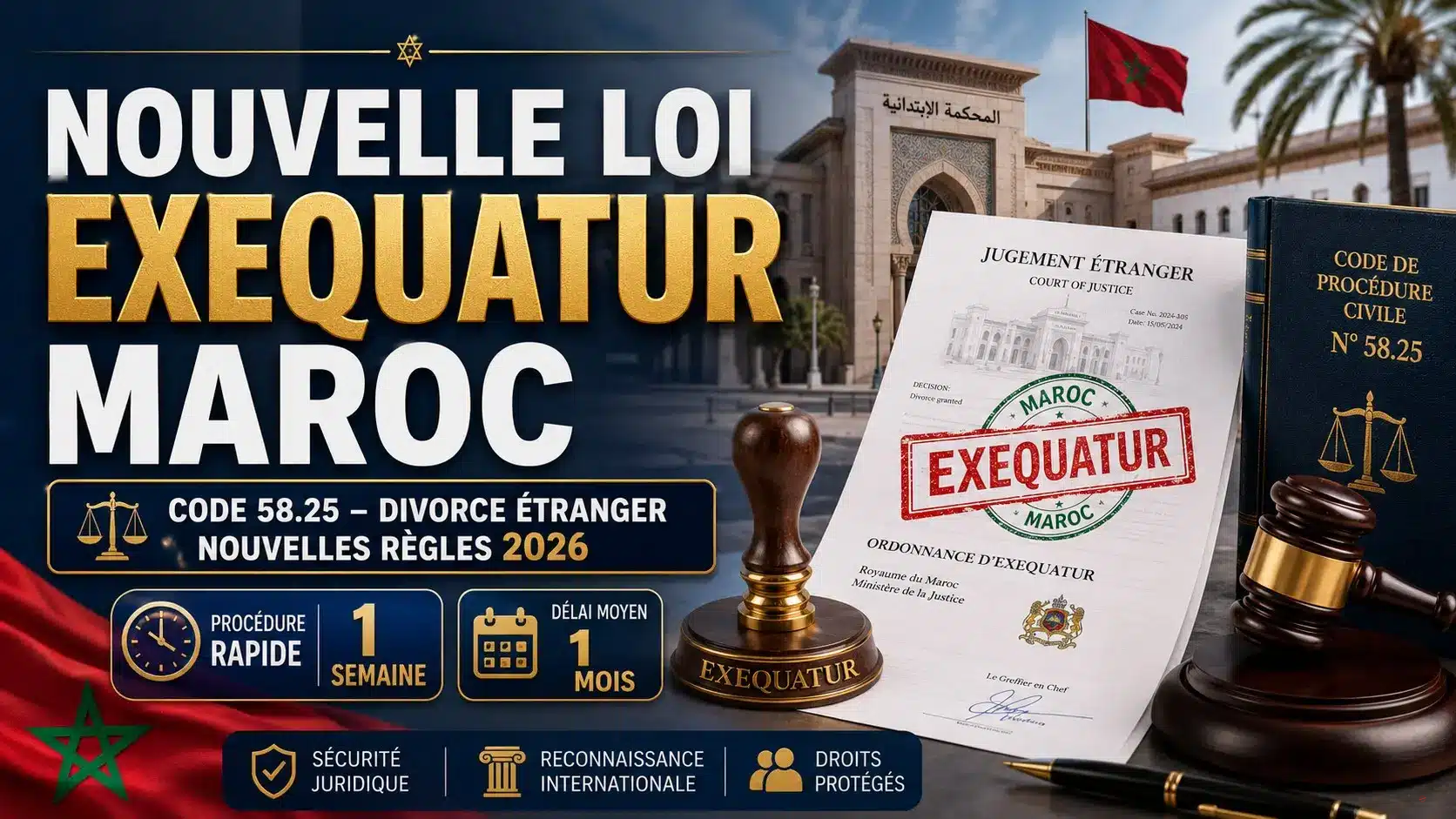

Key Points:
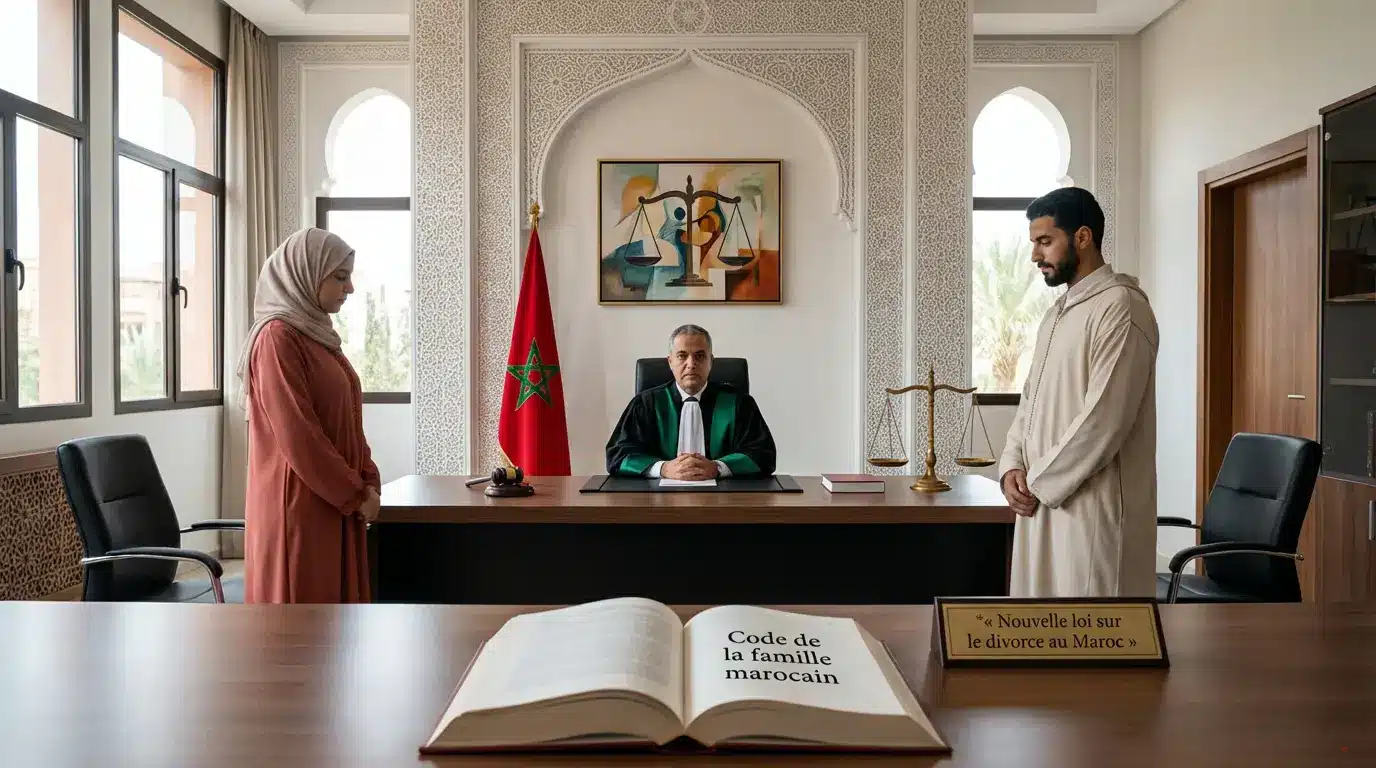
The New divorce law in Morocco, Codified by Law No. 70-03 on the Family Code, it defines divorce as a dissolution of the bonds of marriage exercised by either the husband or the wife, under strict judicial supervision. This modern legislation aims to limit the recourse to the rupture of the matrimonial pact by imposing systematic conciliation procedures and ensuring fairness for each party.
The dissolution of marriage In Morocco, divorce results from the death of one spouse, the termination of the marriage contract, a divorce under judicial supervision, or a judicial divorce (Tatliq). The Family Code emphasizes the exceptional nature of this type of separation, prioritizing the stability of the family unit and the protection of children from the harm caused by its breakdown.
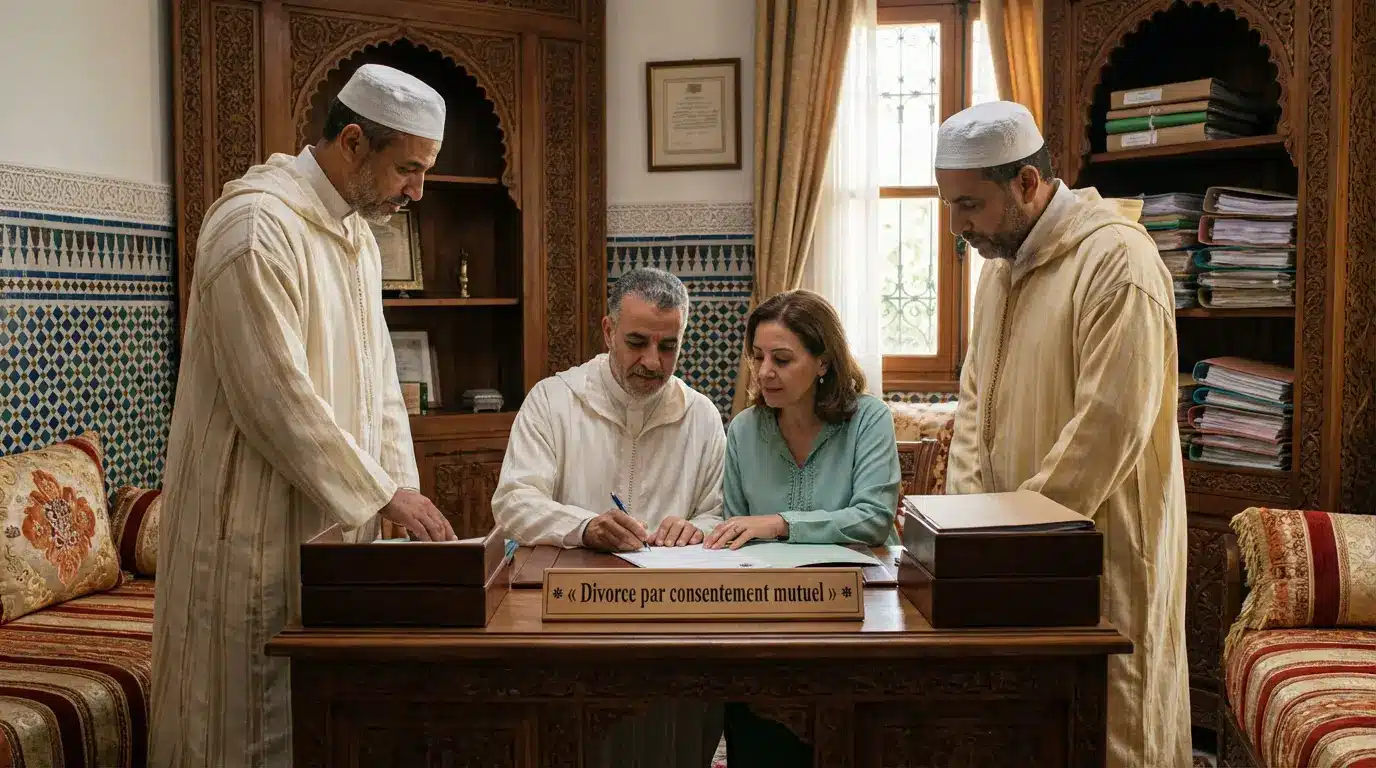
Divorce by mutual consent is an agreement between both spouses to end their union, with or without conditions, provided they do not harm the children's interests. If an agreement is reached, the request is submitted to the court, which, after an unsuccessful conciliation attempt, authorizes two adouls to formalize the act.
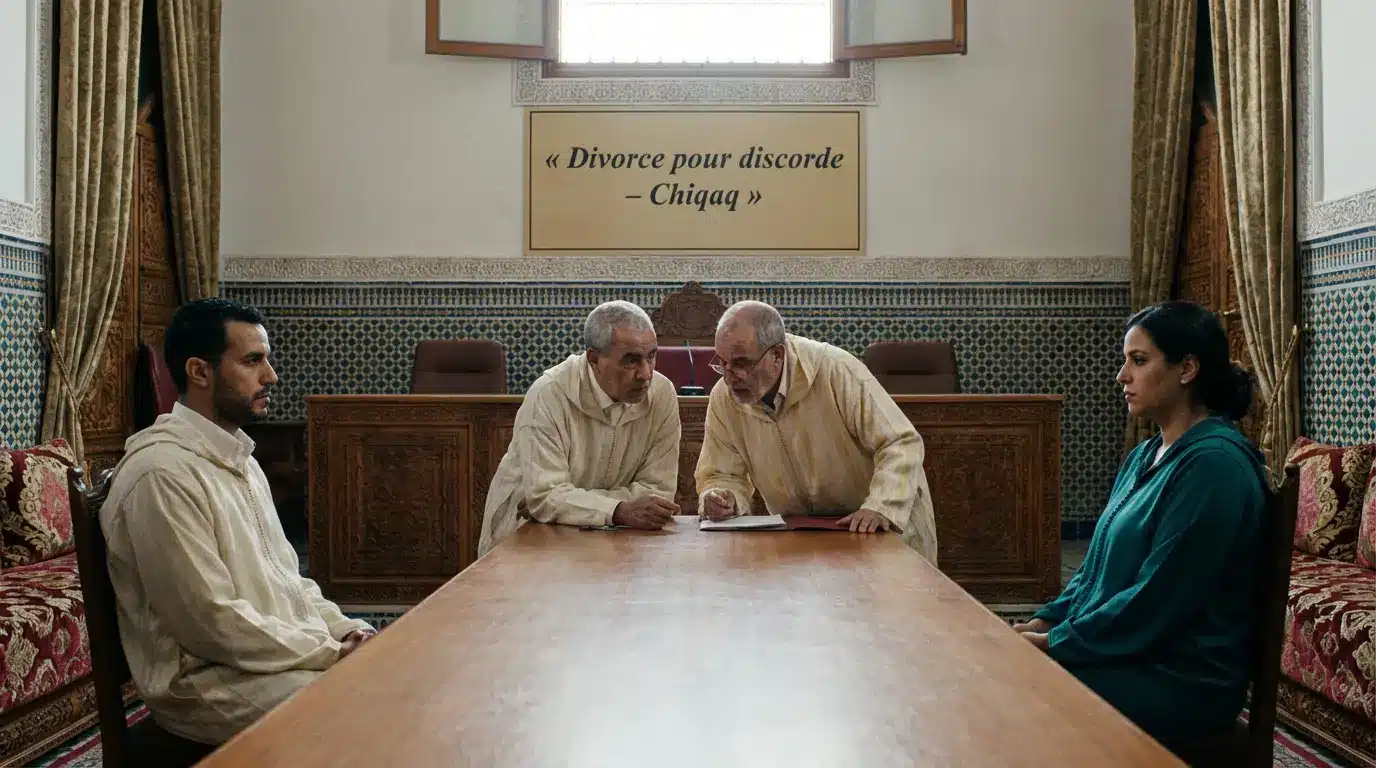
The discord procedure (Chiqaq) is initiated when one or both spouses petition the court to resolve a deep-seated dispute that risks leading to a final breakdown. The court appoints two arbitrators or the family council to attempt mediation; if failure persists, the divorce is granted within a maximum of six months, with the judge ruling on the financial rights due.
Judicial divorce can be requested unilaterally by the wife for specific reasons such as breach of marriage contract conditions, violence, failure to provide maintenance, the husband's prolonged absence, or a prohibitive defect. The harm can be established by any means of proof, including testimonies collected in judge's chambers to preserve family privacy.
This table summarizes the major characteristics of the various procedures provided for by New divorce law in Morocco.
Type of procedure | Legal basis | Initiative | Deadlines and Specificities |
Mutual consent | Article 114 | Joint | Direct authorization after conciliation attempt |
Discord (Chiqaq) | Articles 94-97 | Unilateral or joint | Maximum period of 6 months for judgment |
Judicial divorce for harm (Tatliq) | Articles 98-101 | Wife | Requires proof of harm (moral or material) |
Failure to provide maintenance | Article 102 | Wife | 30-day grace period granted to the indigent husband before judgment |
Financial maintenance (Nafaqa) includes food, clothing, medical care, and children's education, assessed based on the provider's income and the cost of living. New divorce law in Morocco Provides that the court sets the amount of rights due to the wife and children before authorizing the adouls to draft the act.
The wife is entitled to the remainder of her Sadaq (dowry), an Idda (waiting period) maintenance, and a Mout’â (consolation gift) whose amount varies according to the duration of the marriage and the reasons for the breakdown. During her waiting period, which usually lasts three menstrual cycles or three months, she must be able to reside in the marital home or receive an adequate housing allowance.
The father is required to provide for his children until they reach adulthood, or until age 25 if they pursue higher education. In case of the father's proven insolvency, this burden may fall on the mother if she is well-off, in proportion to the needs. New divorce law in Morocco Mandates that the maintenance judgment be rendered within a maximum period of one month.

The Law Firm of Amal Anouide offers specific expertise for New divorce law in Morocco applied to citizens living outside the Kingdom
Moroccans who have dissolved their marriage before foreign jurisdictions must satisfy exequatur procedures for the judgment to be enforceable in Morocco. Marriage certificates concluded abroad according to local formalities must be filed with Moroccan consular services within three months.
The lawyer can represent Moroccans residing abroad without them needing to travel, particularly for property management or inheritance procedures in Morocco. Consultations can be conducted via WhatsApp or video conference, thus facilitating access to Moroccan justice from abroad.
Custody consists of protecting the child from any harm, ensuring their education, and looking after their physical and moral health.
Custody is granted first to the mother, then to the father, then to the child's maternal grandmother. At the age of 15, the child has the latitude to choose which of their two parents will assume their custody.
The marriage of the custodial mother does not automatically result in the forfeiture of her right if the child is under seven years old or suffers from a disability making their care difficult for others. The non-custodial parent retains visitation and overnight stay rights, the terms of which are fixed by agreement or judicial decision.

Yes, the Law Firm of Maître Amal Anouide offers specific support for Moroccans living abroad, including legal representation without mandatory travel.
The New divorce law in Morocco Provides that the court must rule within a maximum period of six months from the date of the application.
No, housing costs constitute a separate obligation from the alimony/child support itself.
It must be subject to an exequatur procedure before a Moroccan court to verify its compatibility with national legislation.
Compliance with deadlines is crucial to ensure the enforcement of New divorce law in Morocco.
Approach / Action | Legal Deadline | Source |
Transcription of a foreign document | 3 months | Article 15 |
Divorce decree (Chiqaq) | 6 months maximum | Article 97 |
Child support decision | 1 month maximum | Article 190 |
Appeal against a judgment | 15 days | Civil Procedure |
Appeal for child support | Immediate declaration | Article 141 |
To secure your rights and benefit from personalized assistance, contact the Law Firm of Maître Amal Anouide.
Immediate appointment booking via WhatsApp: (+212) 648 933 990. Remote consultations available for Moroccans living abroad and residents outside Safi.

A lawyer registered with the Safi Bar Association, she has over 13 years of experience practicing law in Morocco. A recognized specialist in the Moudawana (Family Code), she represents clients in all jurisdictions of the Kingdom, assisting individuals, businesses, and Moroccans residing abroad (MREs) with divorce, inheritance, and real estate disputes. Her firm is distinguished by its approach, which combines legal rigor with a human touch, offering strategic solutions to protect her clients' rights both in Morocco and internationally.