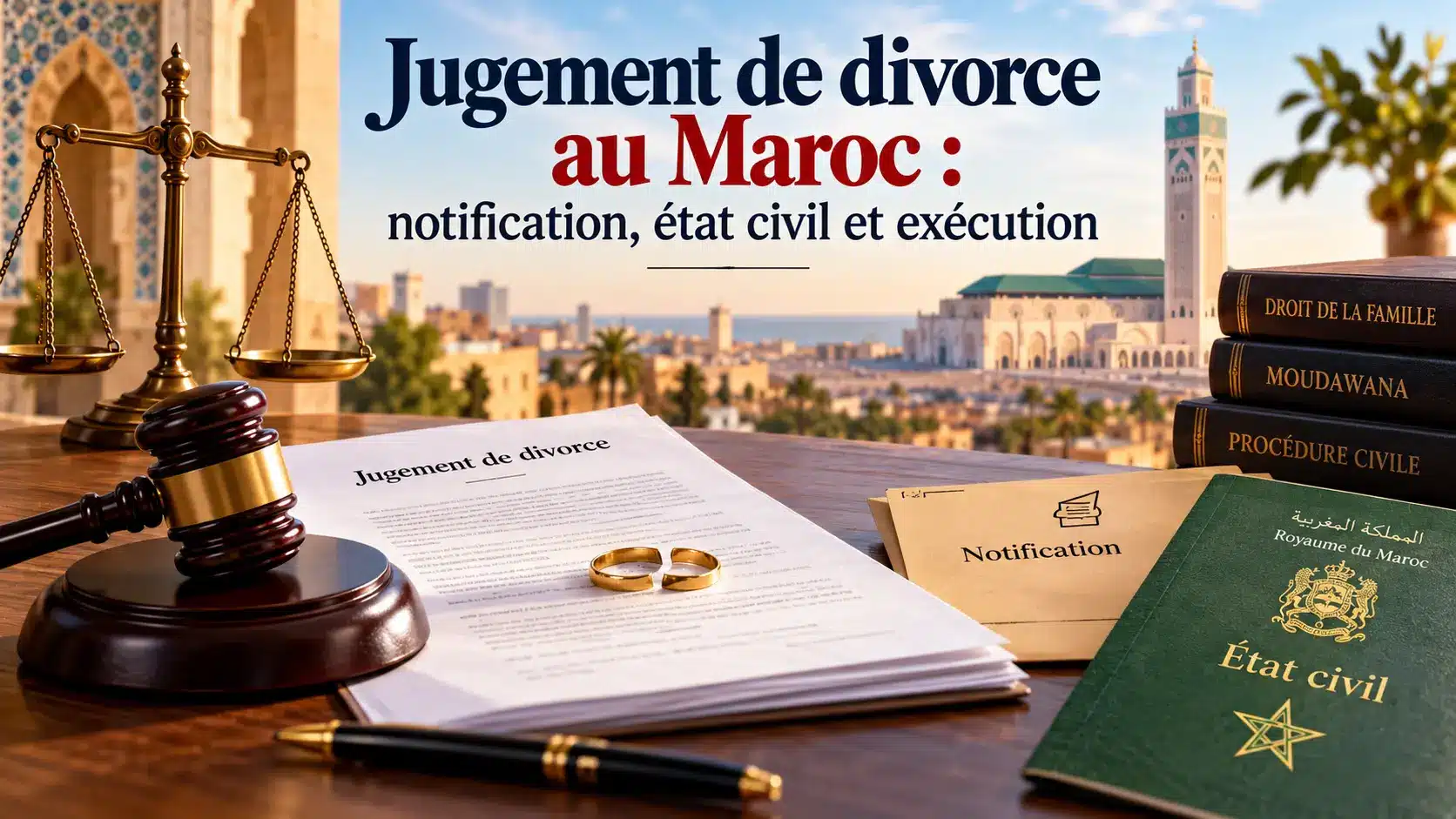
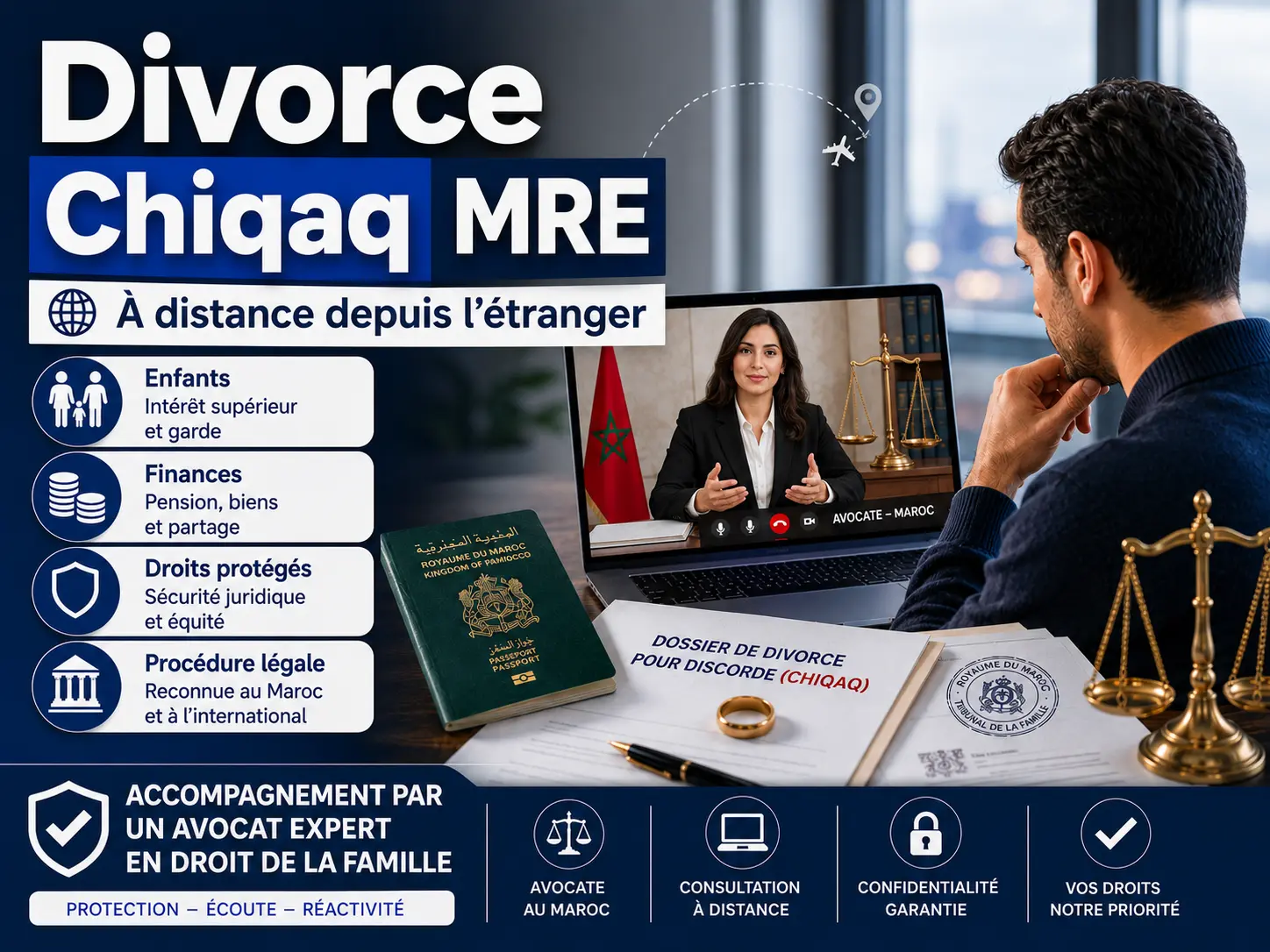
Divorce law in Morocco has undergone a major transformation with the adoption of the Moudawana (Family Code) in 2004Before this reform, divorce, primarily the Talaq, was largely a right exercised by men, with sometimes detrimental consequences for women, who could find themselves "suspended", being neither married nor actually divorced.
The 2004 Moudawana marked a fundamental turning point by granting women right to request a divorce (Tatliq) and by submitting all forms of marriage dissolution are subject to the supervision and control of the judge.Today, whether the divorce is initiated by the husband or the wife, it must go through the court to be legally recognized and registered.
This new approach aims to reconcile religious principles with social realities, recognizing that the continuation of married life can become unbearable for various reasons. Among the different forms of divorce granted by the judge, the Tatliq for Chaqâq (divorce due to discord) has become particularly relevant and frequently used. This type of divorce is distinct from other forms of Tatliq that require proof of a specific cause (such as harm, absence, or non-payment of alimony), because it does not require the petitioning spouse to prove the detailed reasons for the discord.
This plan will explore in depth the The essential distinction between Talaq and Tatliq, then will focus on the Legal framework of Tatliq for Chaqâq, en détaillant ses procédures judiciaires, le rôle crucial du juge dans les tentatives de conciliation, et enfin, les droits et obligations financières (« Mustahaqat ») des époux et des enfants qui en découlent.
I. Fundamental Distinction between Talaq and Tatliq
The divorce law in Morocco has been profoundly reformed by the Moudawana of 2004This law introduced major changes by recognizing a woman's right to petition for divorce and subjecting all forms of marital dissolution to judicial oversight. This development is crucial for understanding the various divorce procedures available today.
- Talaq (Divorce pronounced by the husband)
- Definition and traditional principle Traditionally, the Talaq This is the act by which a man pronounces the repudiation of his wife. Historically, this right was primarily in the hands of the man, which could sometimes leave the woman in a state of "suspension," neither truly married nor divorced.
- current judicial supervision Since the Moudawana, even if pronounced by the husband, the Talaq must absolutely be recorded and confirmed by the courtInformal or oral pronunciations of Talaq, such as "أنت طالق" ("you are divorced"), are not not legally recognized if they are not validated by a judge. The judge intervenes to guarantee the protection of rights and the determination of the resulting obligations.
- Invalidity of certain pronunciations The Talaq is not valid if the husband pronounces it under the influence of alcohol, in a state of extreme anger, under duress, or if it is an oath not to have sexual relations. These pronouncements are not taken into account by the court.
- Types de Talaq :
- Talaq Raj'i (revocable divorce) This is a divorce pronounced by the husband, which allows him to take his wife back without a new marriage contract or dowry during the waiting period (iddah). During this period, the wife has the right to remain in the marital home.
- Talaq Ba'in (irrevocable divorce) This type of divorce permanently ends the marital bond. It requires a new marriage contract and a new dowry if the parties wish to remarry. The Talaq Ba'in is often pronounced by the court.
- The Tatliq (Divorce pronounced by the judge)
- Introduction by the Moudawana of 2004 : The Tatliq is the divorce pronounced by the judge, a major innovation of the 2004 Moudawana which granted the woman the right to request the dissolution of marriage.
- Causes of Tatliq (requiring proof) The Tatliq can be requested for various reasons, which generally require proof in court:
- Husband's failure to one of the conditions stipulated in the marriage contract.
- Harm or nuisance (Darar) suffered by the wife.
- Prolonged absence (Ghayba) of the husband.
- Non-payment of alimony (Nafaqah).
- Default (Aib) making married life impossible, whether physically or sexually.
- Except (oath not to have sexual relations).
- Tatliq for Chaqâq (discord) This is a form of Tatliq that stands out because it does not require detailed proof of the causes of discord. The judge does not seek to establish fault, but rather the impossibility of continuing married life. This right is granted to both the husband and the wife.
- Other forms of marriage dissolution under judicial supervision
- Divorce by mutual consent (Talaq Al-Ittifaqi) The spouses can agree on the terms of the divorce and ask the judge to approve their agreement. The judge ensures that the conditions respect the interests of the family and the children.
- Divorce by Khul' (Buyback of the divorce) A woman can request a divorce by offering compensation to her husband, which may consist, for example, of the return of the dowry. This type of divorce is possible for a woman of legal age and sound mind, and the judge must ensure that the request is not made under duress.
II. Legal Regime of Tatliq for Chaqâq (Divorce for Discord)
The Tatlik for Chaqâq is a form of divorce introduced by the Moudawana of 2004 which transformed divorce law in Morocco, granting both husband and wife the right to request the dissolution of the marriage without having to prove specific fault.
- Definition and Characteristics of Tatliq for Chaqâq
- The Tatliq for Chaqâq (divorce due to discord) est un droit accordé par la loi à la fois au husband and wife.
- The main characteristic of this type of divorce is that the party initiating the action is not required to justify the detailed reasons for which she wishes the marriage to be dissolved. It does not require detailed proof of the causes of the discord. The judge does not seek to establish fault, but rather the impossibility of continuing to live together.
- This type of divorce has become particularly relevant and frequently used [Note: information from my own internal knowledge base, not explicitly in provided sources, but inferred from the emphasis and detail given to it in sources].
- Unlike other forms of Tatliq (such as for damages, absence, or non-payment of alimony) which require specific evidence, the Chaqâq is based on the spouses' inability to maintain a harmonious life together.
- Tatliq's Legal Procedure for Chaqâq
- Application submission The procedure begins with the filing of an originating application by the applicant (husband or wife) with the court.
- Required documents If the husband is filing the application, he must provide:
- A copy of the marriage certificate.
- Proof of his monthly income (if he is a civil servant or employee).
- Evidence of his financial obligations (loans, support for parents or sisters, etc.).
- Documents relating to any illnesses he may be suffering from.
- The children's identity documents (birth certificates, school certificates) if they are beneficiaries of child support.
- Legal assistance It is strongly recommended to use a lawyer in these procedures, as they have the knowledge of the rules and procedures to protect the client's interests and avoid losses due to ignorance of these procedures.
- Role of the Judge and Attempts at Conciliation
- Mandatory conciliation The court proceeds always and systematically resorting to attempts at conciliationThe main objective of the family court is to preserve the family.
- Number and duration of sessions If there are children, there are usually two conciliation sessionsA period of at least 30 days must elapse between each conciliation session.
- Reconciliation failed If attempts at reconciliation fail and the requesting party (husband or wife) persists in their request for Tatliq for ChaqâqThe court pronounces the divorce.
- Financial Rights and Obligations (Mustahaqat)
- If conciliation fails and the claim persists, the court will rule on the financial rights of the woman and children.
- Women's rights :
- Mut'ah (Consolation Allowance) This is financial compensation granted to the woman. However, it is important to note a distinction cruciale :
- Yes, the husband is the origin the demand for Tatliq for Chaqâqthe woman is entitled to the Mut'ah.
- If it's the woman who filed the action in Tatliq for Chaqâq, She is not entitled to Mut'ahbecause she is considered to have chosen the separation. This situation is the subject of discussion and legal debate.
- Right to housing during the period of She (widowhood) The court always rules on the Right to housing for divorced women during the Idda period, which is three months. This refers to the rent payments for that period.
- Muaraj Sadaq (Deferred Dow) : If part of the dowry (sadaq) was due and has not been paid, the woman is entitled to it.
- Children's rights :
- Nafaqah (Alimony) It covers food, clothing, medical treatment costs, and school fees. The court takes into account the standard of living of children before divorceFor example, if the children attended a private school, they retain this right.
- Children's accommodation costs The court always rules on the children's housing costs, which are distinct child support. Either the father provides them with accommodation if he has any, or the court sets an amount for the rent of their accommodation.
- Religious holiday expenses (Tawsi'at Al-Astranger The court also grants an annual amount for expenses related to the Eid al-Adha and Eid al-Fitr celebrations.
- Ajr Al-Hadana (Guard/Maintenance Allowance) The mother (as guardian) has entitlement to a monthly sum for childcare children, since she is the one responsible for them. This amount can be high.
- Husband's rights (child visitation) The husband has the right to visit his children. The court usually sets a day and times for this visit (for example, Sunday from 9 a.m. to 6 p.m.). However, the children must always spend the night with their mother (or caregiver) and cannot sleep at their father's house.
- Filing of Worthy The husband must deposit the amounts of the wife's and children's financial entitlements with the court clerk. If he does not deposit these amounts within a certain period of 30 daysHe is considered to have withdrawn his divorce petition. In this case, the marital relationship resumes its normal course, and the husband is required to assume the expenses of the marriage.
Conclusion :
The 2004 Moudawana marked a profound and structural reform of Family Law In Morocco, radically transforming the dissolution of the marital bond. It introduced a innovative legal framework aiming to balancing the rights and duties of spouses and to to significantly protect the interests of women and children.
At the heart of this reform lies the judicialization of all forms of marriage dissolutionFrom now on, whether it's the Talaq (spoken by the husband) or of the Tatliq (pronounced by the judge or by mutual consent), No dissolution is valid without the intervention and approval of the court.. Cette approche met fin à la prérogative unilatérale et souvent arbitraire du mari, en soumettant tout divorce decree à un contrôle judiciaire rigoureux. La simple prononciation de « tu es divorcée » n’a plus aucune valeur légale sans l’intervention du tribunal.
The The role of the family judge has become central and protectiveThe court is entrusted with the primary mission of attempt at reconciliationAlways striving to preserve the family institution, especially when children are involved, two conciliation sessions are systematically held with a minimum of thirty days between each session. If conciliation fails, the judge is responsible for ensuring that the dissolution is carried out with respect for the rights of all parties, particularly the most vulnerable.