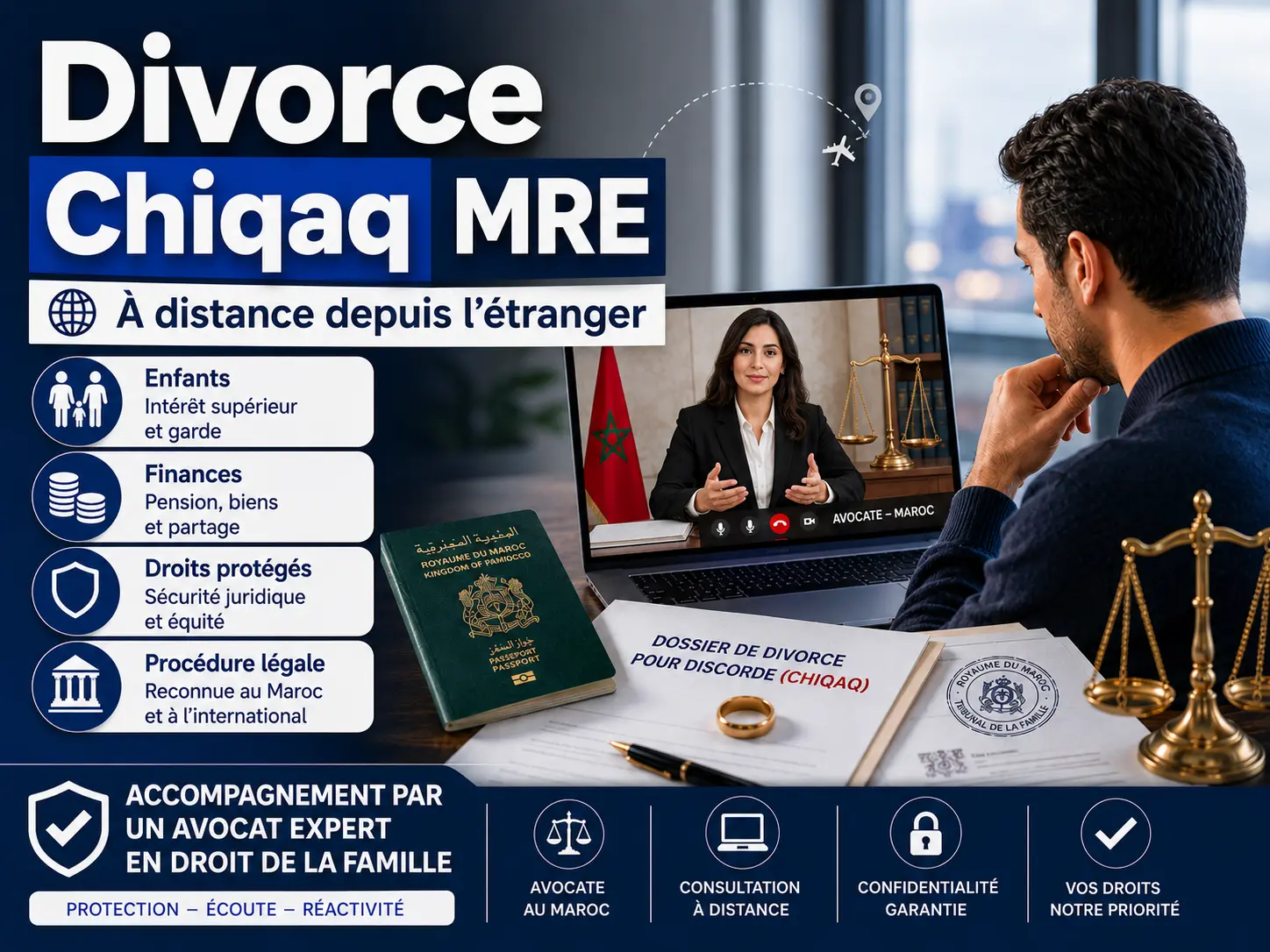


Family law cases in Morocco can involve divorce, child custody, alimony, marriage, inheritance, and disputes concerning family property. They can have significant consequences for civil status, children, financial rights, and the recognition of documents issued abroad.
Master Amal Anouide[Name], a lawyer registered with the Safi Bar Association, assists clients with their legal matters related to Moroccan family law in Safi and various cities throughout the Kingdom. Remote consultations can be offered to those unable to travel, particularly Moroccans residing abroad, depending on the nature of the case and the applicable procedure.
Each case depends on its specific facts, documents, and the competent jurisdiction. The information presented on this page is general and does not replace a personalized assessment of a legal situation.
Request a consultation in family law
The Moroccan Family Code, commonly known as the Moudawana, governs matters relating to marriage, divorce, parent-child relations, custody, alimony, and inheritance. The applicable procedure may vary depending on the nature of the case, the parties' place of residence, the available documents, and the possible existence of a foreign judgment or document.1
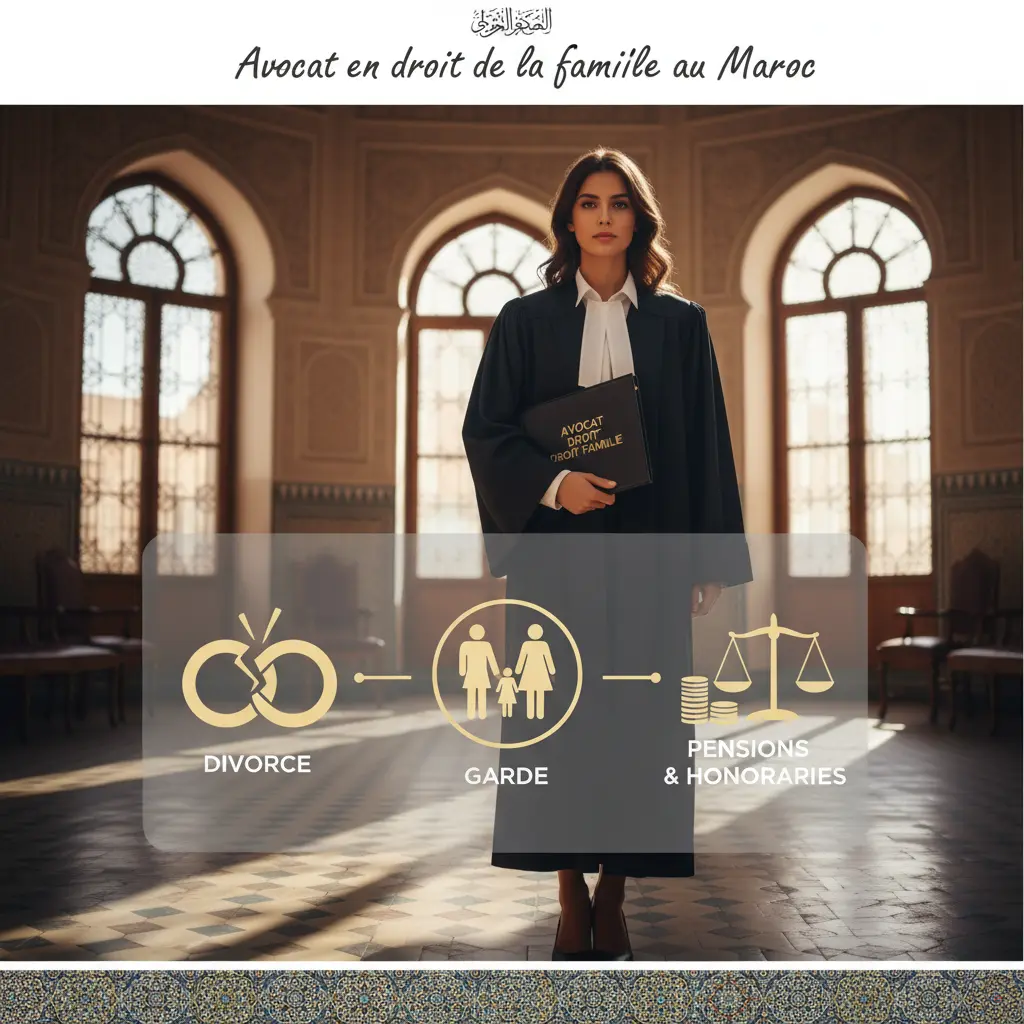
The firm can review cases relating in particular to:
The service that can be offered depends on the facts and documents in the case file. A consultation is recommended before relying on a general explanation or initiating legal proceedings.
Divorce in Morocco is subject to judicial procedures outlined in the Family Code. The specific procedure may depend on the spouses' agreement or disagreement, the presence of children, the financial rights involved, the available documents, and the court's territorial jurisdiction.
An initial examination may focus on:
For a page dedicated to the procedure, see Divorce lawyer in Morocco.
Child custody, or Hadana, concerns the care and protection of the child. Family proceedings may also address the child's residence, visitation rights, and the responsibilities of each parent.
The court examines the specific circumstances of the case and the best interests of the child. Relevant issues may include:
The non-custodial parent may retain visitation rights. The arrangements can be made by agreement between the parents or determined by the court if they cannot reach an agreement. Any agreement must be carefully reviewed before being signed or implemented.
Alimony, often referred to as Nafaqa, can arise from marriage, parentage, or a court order. Its amount and extent depend on applicable rules, the needs of the person entitled to it, the resources of the person liable for payment, and the evidence presented.
The review of a case may include:
No fixed amount can be promised without reviewing the documents and circumstances of the case. The content of a website is not a substitute for a court's assessment or personalized legal advice.
Marriage-related issues may involve Moroccan civil status documents, conditions applicable to future spouses, documents issued abroad, and formalities required by the competent authorities.
Mixed families may also need support regarding:
The required documents vary depending on the nationality of the parties, their residence, their marital status, and the authority involved. It is advisable to check whether a certified translation, legalization, apostille, or other formality is required before submitting any foreign document.
Probate cases may require a death certificate, civil status documents, proof of family ties, property titles, bank statements, and documents concerning assets located in Morocco. Difficulties can arise between heirs or when some family members reside in different countries.
An initial examination can help identify:
To obtain appropriate advice, it is helpful to submit any available documents and specify whether the case concerns an uncontested inheritance, a transfer of ownership, or a dispute between heirs. See also Inheritance lawyer in Morocco.
Moroccans residing abroad may need support in Morocco while living in France, Belgium, Spain, Italy, the Netherlands, Canada, the United Kingdom, or another country.
Depending on the nature of the case and the requirements of the jurisdiction, remote support may include:
Remote assistance does not automatically eliminate the requirement to appear in person. The court, the nature of the proceedings, and the circumstances of the case determine whether an appearance or a specific formality is necessary.

Contact the firm by phone, email, or WhatsApp. Briefly state the nature of the case, the city or country involved, and any important deadlines.
Present the facts in chronological order. Specify the identity of the people involved, their place of residence and the possible existence of any legal proceedings or prior judgment.
Submit the documents needed for the initial review. Depending on the case, this may include a marriage certificate, a divorce decree, birth certificates, identity documents, a summons, financial documents, or property titles.
The lawyer reviews the available information, identifies the main legal and procedural issues and indicates the elements to be checked before the next step.
When continued support is deemed appropriate, the firm will specify the scope of the engagement, the remaining documents to be provided, the anticipated steps, and the applicable fees. Fees and timelines vary depending on the case and must be confirmed directly with the firm.
The required documents depend on the nature of the case. Once you have them, prepare the following:
Submit only the documents necessary for the consultation. Avoid posting sensitive personal data in a public comment or on an unsecured channel.

A lawyer can advise and represent a client in matters such as divorce, custody, visitation rights, child support, marriage documents, inheritance, and certain international family issues. The services available depend on the facts, documents, and procedure.
A remote consultation may be offered by telephone or videoconference. This does not mean that all hearings or formalities can be completed without travel. The requirements must be verified for each case.
The lawyer can, in particular, review documents, identify the applicable procedure, prepare the case file, explain the legal process, and represent the client when appropriate. No outcome or specific timeframe can be guaranteed before the case file has been reviewed.
A parent residing abroad may need advice regarding jurisdiction, documents, communication with the other parent, and the practical arrangements for custody or visitation. The court assesses the specific circumstances of the case and the best interests of the child.
Alimony depends on applicable rules, the needs of the recipient, the resources of the person likely to pay, and the evidence presented. No amount can be determined without an assessment of the situation.
The firm can review documents as part of an initial consultation when appropriate. A foreign document may require a certified translation, legalization, an apostille, or other formality before it can be used in Morocco. The specific formality depends on the document and the relevant authority.
Fees depend on the complexity of the case, the documents to be reviewed, and the scope of the consultation. Contact the firm for an initial estimate before confirming an appointment.
No. This page provides general information only. Legal advice requires a review of the facts and documents in the individual case file.
If you need help with a divorce, child custody, alimony, marriage documents, inheritance, or a family matter related to Morocco, contact the firm to present your situation.
Lawyer Amal Anouide
Lawyer registered with the Safi Bar Association
Safi, Morocco
Phone and WhatsApp: +212 648 933 990
Email : avocateanouide@gmail.com
This page provides general information on family law in Morocco. It does not constitute a Legal consultation and does not create an attorney-client relationship. Laws, regulations, judicial practices, and administrative requirements can change. The application of the law depends on the facts, the documents, and the competent jurisdiction. Seek personalized advice before signing an agreement, filing a claim, submitting foreign documents, or relying on a deadline.