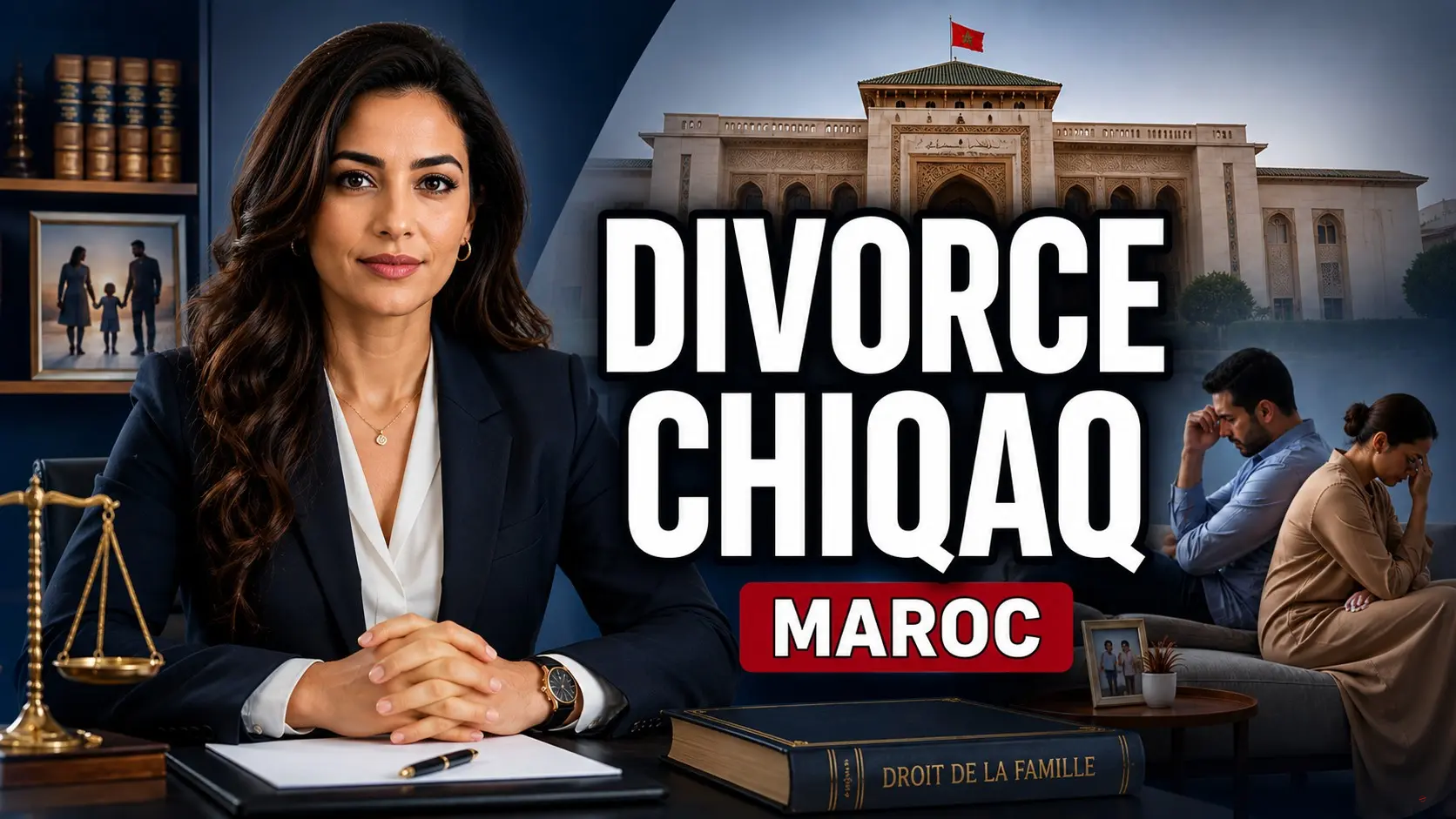
In the Moroccan legal context, family law matters are complex and require specific expertise. A lawyer specializing in Family Law plays a crucial role in resolving family disputes, which are primarily governed by the Family Code (Moudawana), promulgated by Dahir n° 1-04-22 of 12 Hija 1424 (3 February 2004). Marriage, for example, is defined as a pact based on mutual consent with a view to establishing a legal and lasting union, for a life of reciprocal fidelity, purity, and the foundation of a stable family, in accordance with theArticle 4 of the Family Code. Areas of specialization include divorce proceedings, child custody determination, and the calculation of alimony. These sensitive issues require a deep understanding of Moroccan law and great sensitivity. A competent lawyer in this field can offer valuable advice and effectively represent the interests of their clients.
Key takeaways
Importance of expertise in Family Law in the Morocco.
Determination of the Child custody and calculation of the alimony/support payments
Representation of clients' interests in family disputes
Personalized advice for clients
The Role and Services of a Family Law Lawyer in Morocco
THE family law lawyers in Morocco They offer essential legal services to navigate the complexities of family law. Their expertise covers various aspects, including the dissolution of marriage, child custody, and child support.
Specific Skills and Areas of Practice
A lawyer specializing in family law has the necessary skills to handle complex cases related to family matters. Their area of practice includes the legal representation of clients during judicial proceedings. They are trained to manage delicate situations with professionalism, offering personalized legal advice and effective representation in court.
Importance of Legal Representation in Family Matters
Legal representation is crucial in family matters because it ensures that clients' rights are protected throughout the judicial process. A competent lawyer can significantly influence the outcome of a case. They help navigate the complexities of the Moroccan legal system, ensuring that clients receive fair treatment.
Consultation and Legal Representation Services
Family law lawyers offer consultation services to help clients understand their rights and options. They also represent their clients in court, arguing their case with expertise. These services are essential for people facing family legal issues, offering them comprehensive legal support.
The Moroccan family legal system: legal framework and specific features
Family Law Lawyer in Morocco 2
Family matters in Morocco are handled according to a unique legal system that takes into account the country's cultural and religious specificities. This system is primarily governed by the Moudawana, or the Family Code, promulgated by Dahir n° 1-04-22 of 12 Hija 1424 (3 February 2004). This law constituted a major historic event, introducing significant legislative and social reforms aimed at modernizing family legislation and better clarifying the rights and duties of family members, particularly by guaranteeing a balance between men and women and the protection of the child.
Recent Developments in Family Law
The drafting of the 2004 Family Code also took into account the spirit of the times, the imperatives of change, and the commitments undertaken by the Kingdom regarding human rights as they are universally recognized.The family law in Morocco continues to evolve, with ongoing efforts to align national laws with international human rights standards. For anything not expressly stated in the Code, reference is made to the prescriptions of the Maliki Rite and/or the conclusions of jurisprudential effort (Ijtihad). .
Competent Courts in Family Matters
THE courts of first instance are competent to handle family matters, including personal status issues, inheritance, civil status, and matters relating to the safeguarding and protection of the family. They can be divided into family affairs sectionsThe public prosecutor's office acts as the principal party in all actions aimed at the application of the provisions of the Family Code.
The different types of marriage dissolution recognized by Moroccan law
In Morocco, the law provides for different types of marriage dissolution, which include termination, divorce under judicial supervision, the Judicial divorce (Tatliq) or the divorce with compensation (Khol')These types of dissolution are governed by specific rules and conditions, reflecting the complexity of family relationships and the need to adapt procedures to the needs of the parties involved.
Divorce under judicial supervision (Articles 78 to 93 (of the Family Code): This refers to the dissolution of the marriage contract requested by the husband or wife, according to conditions specific to each of them, under the supervision of the courts. The prerogative of divorce This right is recognized for both the husband and the wife through the option granted by the husband. The court summons the spouses for an attempt at reconciliation. If reconciliation fails, the husband must deposit an amount to cover the rights owed to the wife (remaining portion of the Sadaq, remuneration for the waiting period, a consolation gift, and housing) and to the children (alimony) before the divorce is authorized and finalized.
Divorce by mutual consent (Article 114 (of the Family Code): The two spouses may agree in principle to end their marital union, either unconditionally or with conditions, provided that these conditions are not incompatible with the provisions of the Code and do not prejudice the interests of the children. After an attempt at conciliation by the court, if this proves impossible, the divorce is authorized.
Judicial divorce (Tatliq) (Articles 94 to 113 (of the Family Code): It is pronounced by a court at the request of one of the spouses for specific reasons listed by law.
Judicial divorce due to discord (Chiqaq) (Articles 94 to 97 (Family Code): This procedure is initiated when both spouses, or one of them, request the court to resolve a dispute that threatens to lead to separation. The court attempts conciliation, potentially appointing arbitrators. If conciliation proves impossible and the discord persists, the court grants the divorce and determines the alimony or other rights due, taking into account each spouse's responsibility in the causes of the divorce. This procedure may be initiated by the court in certain cases of polygamy if the first wife does not consent to the divorce without filing for divorce.
Harm and abuse (Articles 98(2), 99 to 101 (of the Family Code): A spouse may request a judicial divorce if he or she suffers material or moral harm (including infamous or immoral acts or behavior) from his or her spouse, making it impossible for him or her to maintain the marital ties.
Failure to provide maintenance (Articles 98(3), 102 and 103 (Family Code): A spouse's failure to fulfill their obligation to pay required and due alimony is a valid reason for divorce. The court may grant a divorce if the spouse refuses without proving their incapacity or if they are unable to provide maintenance within a specified timeframe due to indigence.
Prolonged absence (Articles 98(4), 104 to 106 (of the Family Code): If the husband is absent from the marital home for a period exceeding one year, the wife has the right to file for divorce. Similarly, if the husband is serving a prison sentence exceeding three years, the wife may file for divorce after one year of detention.
Failure to comply with a condition stipulated in the marriage certificate (Articles 98(1) and 99 (of the Family Code): Any failure to comply with one of the conditions legally stipulated in the marriage certificate is considered as a prejudice justifying the application for judicial divorce.
Redhibitory defect in the spouse (Articles 98(5), 107 to 111 (of the Family Code): Vices preventing marital relations or diseases endangering the life or health of the other spouse, from which a cure cannot be expected within a year, are grounds.
Oath of continence (Ilaâ) and abandonment (Hajr) (Articles 98(6) and 112 (Family Code): When a husband swears an oath of continence towards his wife or abandons her, she may petition the court, which grants the husband a period of four months. After this period, if the husband does not repent, the divorce is granted by the court.
Divorce with compensation (Khol') (Articles 115 to 120 (Family Code): The two spouses may agree to divorce by khul'. The consent of an adult wife to compensation is valid, and the compensation may consist of any legally permissible asset, provided there is no abuse on the part of the husband. In case of disagreement regarding the compensation, the court will determine it.
In summary, the Moroccan Family Code offers various options for dissolving a marriage, each tailored to different circumstances and subject to rigorous judicial oversight. Understanding these options is crucial for navigating the process effectively.
Marriage dissolution procedure in Morocco: steps and legal deadlines
Family lawyer in Morocco 3
The dissolution procedure Marriage in Morocco is governed by strict legal steps and deadlines. This procedure is defined by the Moudawana, the Moroccan Family Code, which aims to regulate the dissolution of marriage in a way that protects the rights of all parties involved.
Application submission and required documents
The procedure for dissolving a marriage begins with filing a petition with the competent court. The petition requests authorization to have the act recorded. divorce It must include the identity, occupation, and address of the spouses, the number of children (if any), their ages, health status, and school status. The necessary documents also include the document establishing the marriage, as well as evidence establishing the spouse's financial situation and financial obligations.
Mandatory reconciliation phases
After the application is filed, the court summons the spouses for an attempt at conciliation. If there are children involved, the court undertakes two attempts at conciliation, spaced at least thirty days apart.These phases are mandatory and are intended to preserve the family.
Judgment, enforcement and possible appeals
If attempts at reconciliation fail, the court will grant the divorce. It is important to note that Court decisions rendered in matters of judicial divorce, divorce by Khul' or dissolution of marriage are not subject to appeal insofar as they terminate the marital ties.Other aspects of the judgment, such as the determination of rights owed to the wife and children, are subject to appeal in accordance with ordinary legal procedures. The enforcement of the judgment notably involves the division of assets and the determination of alimony payments.
Indicative steps and timeframes
Steps
Time limit
Actions
Application submission
Immediate
Submit the application for dissolution of marriage
Attempts at reconciliation
Spaced at least thirty days apart (if children)
Reconciliation attempts by the court
Judgement
After failed conciliation
Pronunciation of the dissolution of the marriage
Enforcement of the judgment
After the judgment
Liquidation of assets, determination of pensions
A lawyer specializing in family law can greatly help in navigating these complex stages.
Child custody (Hadana) after divorce
Family lawyer in Morocco 4
Moroccan law places great importance on child custody (Hadana) after a divorce, ensuring that the children's interests are protected. Child custody is governed by specific legal criteria designed to guarantee the well-being of minors.
Legal criteria for awarding custody
In Morocco, child custody (Hadana) is governed by specific legal criteria and a order of priority established by the Moudawana. Custody is entrusted first and foremost to the mother, then at father, then to the child's maternal grandmotherFailing that, the court may award custody to one of the closest and most suitable relatives, always in the best interests of the child. The general conditions for custody include legal age (except for the parents), integrity and honesty, the capacity to raise and protect the child (religiously, physically, morally, and academically), and the unmarried status of the prospective guardian (with certain exceptions).
A child who has reached the age of fifteen can choose which of their father or mother will assume custody., or one of his close relatives in the absence of the parents, subject to the agreement of his legal representative and that this choice is compatible with his interests.
Visitation and custody rights of the non-custodial parent
The non-custodial parent retains visitation rights and accommodation, which are essential to maintaining a healthy relationship with the child. The father or mother who does not have custody of the child has the right to visit and receive the child.The terms of these rights are generally determined by the court, or by agreement between the parents (Article 181), or by court order in case of disagreement (Article 182The court takes into consideration the specific conditions of each party and the circumstances of each case.
Custody decisions can be modified if significant circumstances change. The court may reconsider the allocation of custody in the best interests of the child (Article 170). Similarly, if the organization of the visit becomes detrimental, its revision may be requested (Article 183). Modification procedures involve presenting new evidence to the court, demonstrating that the change is in the best interests of the child.
Alimony and post-divorce financial rights
Alimony (Nafaqa) is a crucial aspect of family law in Morocco, particularly after a dissolution of the marriage. It represents a financial obligation arising from marriage, kinship and commitment (Article 187).
Calculation and determination of alimony (Nafaqa)
The calculation of alimony, or Nafaqa, depends on several factors. For its assessment, the court takes into account the the income of the person receiving the pension, the situation of the person entitled to it, the cost of living, and the customs and practices of the beneficiary's social environment (Article 189It is based on the statements of the parties and the evidence they produce, and may call upon experts (Article 190). Children's housing costs are separate from child support and childcare compensation (Article 168).
Procedures for the execution and recovery of pensions
The enforcement of child support is a crucial step following its determination. The court determines the means of enforcing the judgment ordering child support and housing costs, including withholding at source and guarantees to ensure the continuity of payments (Article 191). Alimony applications are decided in summary proceedings and the decisions are enforceable immediately notwithstanding any appeal (Article 179 bis of the Code of Civil Procedure).
Review of amounts and penalties in case of non-payment
Alimony amounts may be revised in the event of a significant change in the financial circumstances of the parties. However, No request for an increase or decrease will be accepted, except in exceptional circumstances, before the expiry of a period of one year. (Article 192Penalties may be applied in the event of non-payment, including the provisions relating to family abandonment for non-payment without valid reasons for a maximum of one month (Article 202).
Property division and matrimonial property regimes in Morocco
The division of assets and matrimonial property regimes are crucial aspects of family law in MoroccoCouples need to understand these rules in order to effectively manage their shared assets.
Moroccan legal system and its specific characteristics
The Moroccan legal system is based on the separation of property. Each spouse has their own separate property. (Article 49However, the spouses may agree on the conditions for the management and distribution of assets acquired during their marriage in a document separate from the marriage certificateThe notaries inform both parties, at the time of the conclusion of the marriage, of the provisions of Article 49.
Marriage contracts and specific protection clauses
Marriage contracts can include specific clauses to protect the interests of both parties. All contractual clauses in a marriage contract are binding.provided they are not contrary to the purposes of marriage and the mandatory rules of law (Article 47).
Procedure for the liquidation of marital assets
The division of marital assets typically occurs during a divorce. This procedure involves inventorying jointly acquired property, settling debts, and dividing remaining assets between the spouses. In case of disagreement and in the absence of a prior agreement, the general rules of evidence apply. the judge's assessment of each spouse's contribution to the growth of the family's assets.
Specific cases handled by a family law attorney in Morocco
THE family law lawyers in Morocco are often faced with complex cases involving mixed and international marriages. These situations require a thorough understanding of the applicable laws and regulations.
Mixed and international weddings
The Family Code applies to all Moroccans, even those holding another nationality, and any relationship between two people when one of them is Moroccan (Article 2Moroccans residing abroad can contract marriage according to local formalities, provided they comply with certain conditions of the Code (consent, capacity, absence of legal impediments, and the presence of two Muslim witnesses) (Article 14The marriage of a Muslim woman to a non-Muslim man is prohibited, unless the latter belongs to the People of the Book (Article 39(4)).
Conflicts of laws and competent jurisdictions
Conflicts of law arise when the laws of different countries apply to the same family situation. Determining the competent jurisdiction is crucial for resolving these conflicts effectively.
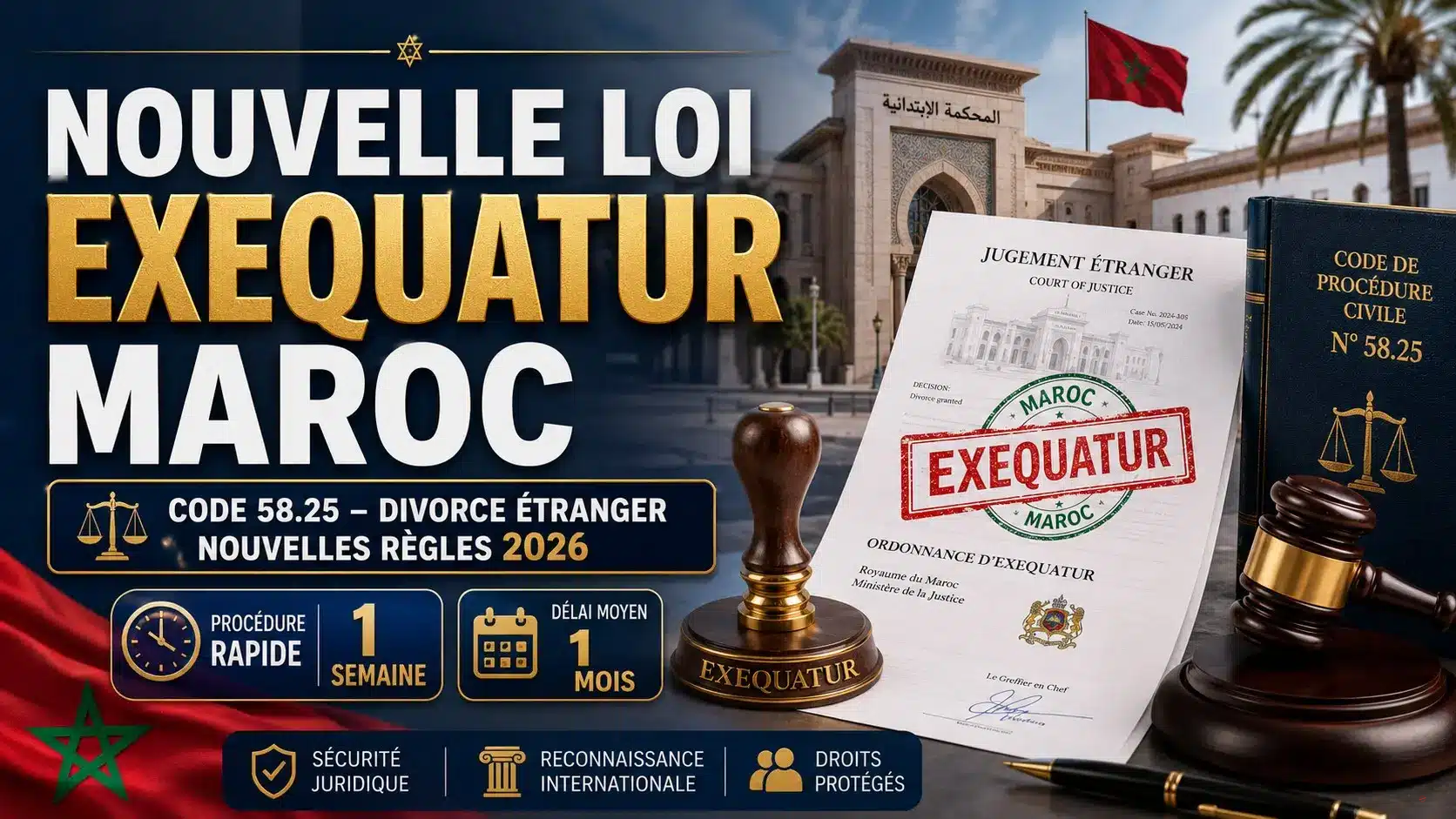
Recognition and enforcement of foreign judgments in Morocco
The recognition and enforcement of foreign judgments in Morocco are subject to strict rules. Judgments of dissolution of marriage issued by foreign courts are enforceable. if they are rendered by a competent court and based on grounds that are not incompatible with those provided for in this CodeThese judgments and acts must comply with the legal procedures relating to enforcement, in accordance with the provisions of the Articles 430, 431 and 432 of the Code of Civil Procedure.
Conclusion: The importance of legal support tailored to family issues
En matière de droit de la famille, les enjeux sont souvent complexes et sensibles. L’accompagnement juridique joue un rôle crucial dans la résolution des conflits familiaux au Maroc. Un avocat spécialisé en droit de la famille peut offrir l’expertise nécessaire pour naviguer dans les méandres du système juridique marocain.
L’importance d’un accompagnement juridique approprié se manifeste dans la capacité à anticiper et à gérer les litiges familiaux. Cela concerne notamment les procédures de dissolution du mariage, la garde des enfants, les pensions alimentaires, et le partage des biens. Un avocat expérimenté peut aider à protéger les droits de chacun et à trouver des solutions équitables.
When dealing with family issues, it is essential to have access to appropriate legal support. This not only allows you to understand the legal implications of the decisions made but also ensures that the interests of all parties are effectively represented.
For tailored and professional legal support in these complex cases, the office of Mme Amal Anouide, a lawyer specializing in family law in Morocco, is available to offer you advice, support and effective representation.
FAQ
What are the different types of marriage dissolution recognized by Moroccan law?
Moroccan law recognizes several types of dissolution of marriage (Article 71 of the Family Code), in particular:
The divorce under judicial supervision (Articles 78 to 93), which is the dissolution of the marriage contract at the initiative of the husband or wife (by right of option).
The divorce by mutual consent (Article 114), where the two spouses agree to end their union.
The Judicial divorce (Tatliq) (Articles 94 to 113), pronounced by a court for specific reasons. Among these reasons are the divorce for discord (True), damage, lack of maintenance, prolonged absence, latent defect, oath of continence or abandonment.
The divorce with compensation (Khol') (Articles 115 to 120).
How is child support calculated in Morocco?
Child support is calculated based on the the child's needs and the resources of the parent required to pay it, the cost of living, and the customs and practices in the social environment of the person entitled to child support, in accordance with the provisions of thearticle 189 of the Family Code. The court bases its decision on the statements and evidence of the parties and may call upon experts (Article 190).
What are the criteria for awarding child custody after a divorce?
The criteria for awarding child custody in Morocco are defined by the Moudawana and take into account the best interests of the child. Custody is awarded according to a Legal order of priority: first to the mother, then to the father, then to the maternal grandmother (Article 171The requirements for the person granted custody include legal majority (except for parents), integrity, honesty, and the ability to raise the child (Article 173Furthermore, the child, From the age of fifteen, a child has the right to choose the parent who will provide their care. (Article 166).
How to choose a lawyer specializing in family law in Morocco?
When choosing a family law attorney, it is recommended to verify their qualifications and experience in the field, and to discuss their strategy during an initial consultation. Establishing a relationship of trust is essential.
What documents are needed to initiate divorce proceedings?
The documents required to initiate divorce proceedings include, in particular the marriage certificate, the spouses' identity documents, and evidence establishing the spouse's financial situation and expenses (Article 80), as well as any other document deemed relevant by the court.
What is the Moudawana and what is its impact on family law?
The Moudawana is the Moroccan Family Code, promulgated in 2004 (Dahir No. 1-04-22), which regulates family matters, including marriage, the dissolution of marriage, child custody, and inheritance. It introduced major reforms aimed at modernizing legislation and ensuring gender equality and child protection.
What are the average fees for a family law attorney in Morocco?
A family law attorney's fees vary depending on the complexity of the case, the attorney's experience, and the chosen fee structure (flat fee, hourly rate, retainer).
How does the procedure for dividing assets work in the event of a divorce?
The procedure for dividing assets in the event of a divorce is governed by the matrimonial property regime applicable to the spouses, which is by default the separation of property have Morocco (Article 49The spouses may have agreed on a method of managing and dividing assets acquired during the marriage in a document separate from the marriage certificate. In the absence of an agreement, the judge assesses each spouse's contribution to the growth of the family assets.
What are the rights of the non-custodial parent regarding visitation and accommodation?
The non-custodial parent has visitation and accommodation rights (Article 180) which are determined by the court, taking into account the best interests of the child. These arrangements may be defined by agreement between the parents (Article 181) or by court order (Article 182).
How to challenge a court decision regarding child custody?
It is possible to challenge a court decision regarding child custody by filing an appeal with a higher court. The court may reconsider the allocation of custody or the organization of the visit if new circumstances make the decision detrimental to one of the parties or to the child, or in the event of a failure to implement the agreements or decisions (Article 170 and Article 183).
Amal Anouide
Lawyer in Morocco
Name of the firm: Amal Anouide Law Firm. She is registered with the Safi Bar Association.